Naples Beach Parking FAQ for First-Time Visitors in 2026
Your beach day in Naples can stall before the first flip-flop hits the sand. Parking rules change by access point, and some spots that look open are not open to everyone.
In 2026, Naples beach parking works best when you treat it like part of the plan, not a last-minute chore. A few minutes of prep can save you a ticket, a tow, or a longer walk than you expected.
What first-time visitors need to know first
Naples does not handle beach parking like a wide-open public lot. At city and county access points, you usually need either a paid space or a valid beach parking permit, and the rules can shift with season, demand, and special events. The city's beach parking information page is the place to check before you roll in.
For visitors, the big point is simple, there is no free-for-all beach parking at the shoreline. If the curb or sign says resident-only, that sign wins even when the spot looks empty. The city also lists beach parking violations at a $102 fine , so guessing is expensive.
If the curb says resident-only, treat it that way even when the lot looks half empty.
Hours matter too. Current city guidance says no parking from 11 pm to 5 am . Oversized vehicles can be a problem as well, since trailers, buses, RVs, and big trucks may be restricted within a block of the beach. If you are bringing a larger vehicle, assume you need a backup plan.
Where first-timers can park without guessing
The easiest choice is usually the beach access point you already know you want to use. A handful of Naples accesses are meter-based and familiar to visitors, including 7th Ave N, Horizon Way, Via Miramar, and Seagate Drive. Those names matter because they tell you where public parking starts and where resident-only streets begin.
If you want to compare beach areas before you leave your hotel, the Naples beaches overview can help you match the beach to the parking setup. Naples Pier is still closed for rebuild, so don't plan your day around that parking area.
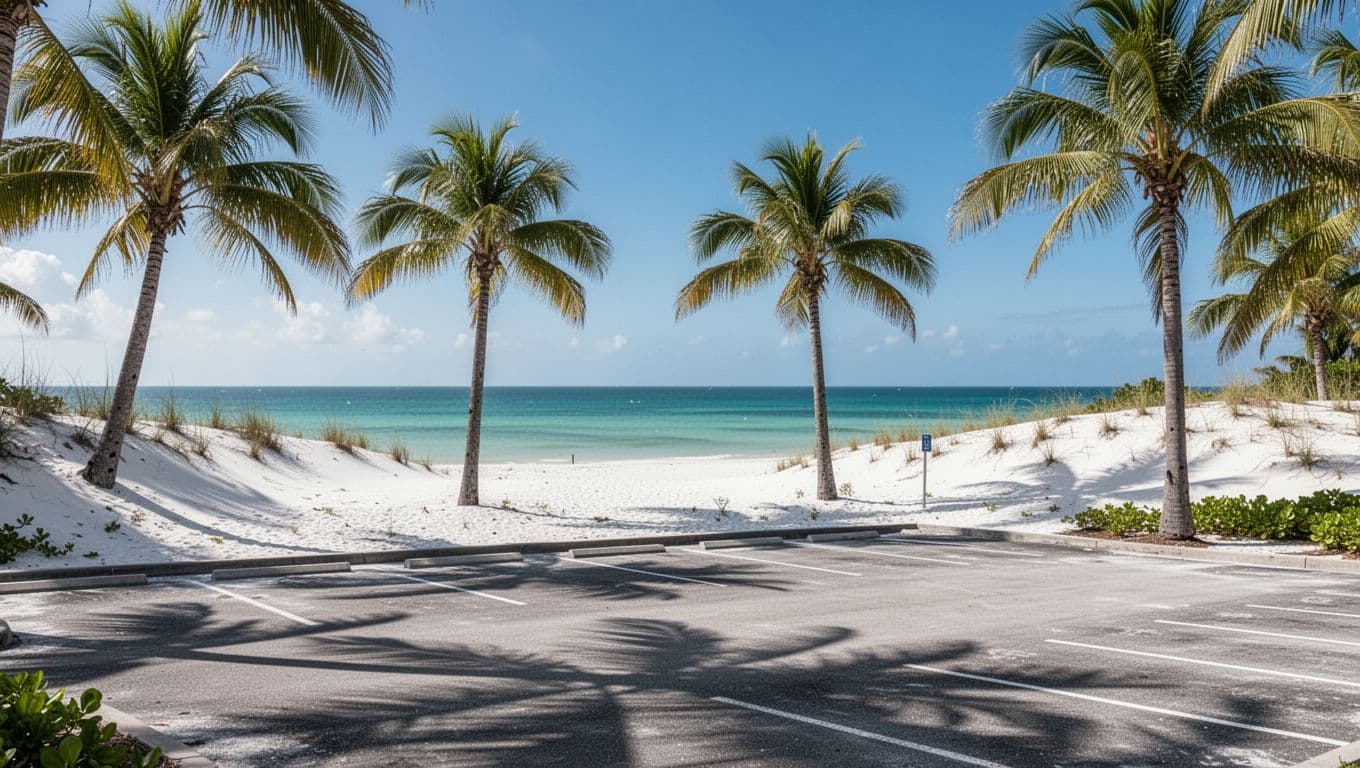
Some visitors also use a little more distance to their advantage. Parking on 5th Ave S can be free, then you walk a few blocks to the beach. That works well if you don't mind the extra steps and you'd rather skip the scramble for a curbside spot.
For a more structured option, look at managed parking areas and garages before peak hours hit. Clam Pass Park and the Vanderbilt Beach Garage are common backups when street spaces fill fast. On busy weekends, arriving early matters more than hunting for the perfect spot.
Permit, meter, and fee basics
The payment question gets easier when you see the choices side by side. Rates can change, so think of this as a quick map, not a guarantee for every season.
| Parking option | Typical 2026 cost | Best for | Watch for |
|---|---|---|---|
| City beach meters | Posted meter rate | Short beach visits | Some spaces need a permit instead of payment |
| Annual non-resident beach permit | $50 | Repeat beach days | Valid for one year, not transferable |
| Collier County beach parking | About $10 | County-managed beach access | Check the posted fee at the lot |
| Delnor-Wiggins Pass State Park | About $6 per vehicle | Full beach days at a state park | State park fees are separate from city parking |
The annual non-resident permit can make sense if you plan several beach trips in one stay. City rules say it must be firmly affixed to the driver-side lower windshield corner, and that detail matters more than people expect. If the permit is loose, hidden, or sitting in the wrong place, it may not protect you.
Disability permit holders can park free in spaces, but the permit does not override bus zones, fire lanes, handicapped aisles, or no-parking zones. If you need an accessible space, keep the vehicle moving only when you're parking legally and using the placard correctly.
Most paid spaces still accept coins or cards, so don't assume tap-to-pay is the only option. A quick scan of the meter or sign saves time and keeps you from hunting for a payment app with sand on your hands.
Parking mistakes that cost visitors time and money
First-timers usually get into trouble in the same few ways. The good news is that every one of them is avoidable.
- Parking on a resident-only beach end because the curb looks open.
- Staying past 11 pm to 5 am because the beach area feels quiet.
- Assuming one beach permit works at every county or state park space.
- Bringing a trailer, RV, bus, or oversized truck too close to the beach.
- Skipping the sign at the access point and relying on a map alone.
The city's base fine for beach parking violations is $102 , and towing is a real possibility for blocked or oversized vehicles. That means a cheap-looking spot can become the most expensive part of the day.
Beach rules still apply once you leave the car. Keep glass off the sand, skip fires, and clean up before you go. A little attention on the front end keeps the day easy for you and everyone around you.
When a lower-stress beach day is worth it
Beach parking is only one errand in a full vacation day. If your Southwest Florida stay includes groceries, pharmacy pickups, or an airport ride, a VIP-style helper can make the day feel lighter.
That's where a local service can fit in nicely. Our local delivery services can take some of the running around off your plate, and current delivery rates make it easier to plan ahead. If you'd rather stay on vacation time instead of spending it in parking lots, that kind of help can be the difference between a rushed day and an easy one.
Conclusion
Naples beach parking in 2026 comes down to a few habits, read the sign, know the access point, and pay attention to the rules before you pull in. Once you separate meter spots, permit spaces, and resident-only streets, the whole system feels a lot less confusing.
First-time visitors do best when they arrive early and choose the spot that fits the day, not just the closest curb. That leaves more time for the water, the walk, and the reason you came in the first place.
Naples Beach Parking FAQ
Do I need a permit to park at Naples beaches in 2026?
If you're visiting, you usually need to pay for parking or use a valid beach permit. The annual non-resident permit is mainly useful if you expect several beach days, while one-time visitors often just use metered or paid spaces.
Is there free parking near Naples beaches?
A few places away from the sand can be free, including some street parking on 5th Ave S. You'll walk farther, though, and that's the tradeoff. Free parking usually means you are not parked at the beach end itself.
What is the fine for parking the wrong way?
The City of Naples lists a $102 fine for beach parking violations. Towing is also possible in some cases, especially with oversized vehicles or blocked areas. Checking the sign before you park is a lot cheaper than a ticket.
Can I park overnight near the beach?
No. Current city guidance says no parking from 11 pm to 5 am . Even if the area looks calm late at night, overnight parking near the beach can lead to a citation.
Do disability placards work for beach parking?
Yes, valid disability permit holders can park free in spaces, but the placard does not override every restriction. Bus zones, fire lanes, handicapped aisles, and no-parking zones still stay off-limits.
What if I want the easiest beach day possible?
Arrive early, pick the access point first, and pay close attention to the meter or permit sign. That simple routine takes most of the stress out of Naples beach parking and keeps the focus on the beach, not the curb.