Cape Coral Burrowing Owls: A Respectful Viewing Guide
If you're hoping to see Cape Coral burrowing owls , the most important rule is simple: watch without changing what the birds do. Their low, open habitat makes them easy to spot, but the same visibility can leave them exposed to traffic, pets, construction, and curious visitors.
The best way to enjoy Cape Coral burrowing owls is to understand their burrows, keep a generous distance, and respect the property around each nest. With the right approach, you can observe these unusual Florida residents without putting their homes at risk.
Why Cape Coral Burrowing Owls Matter
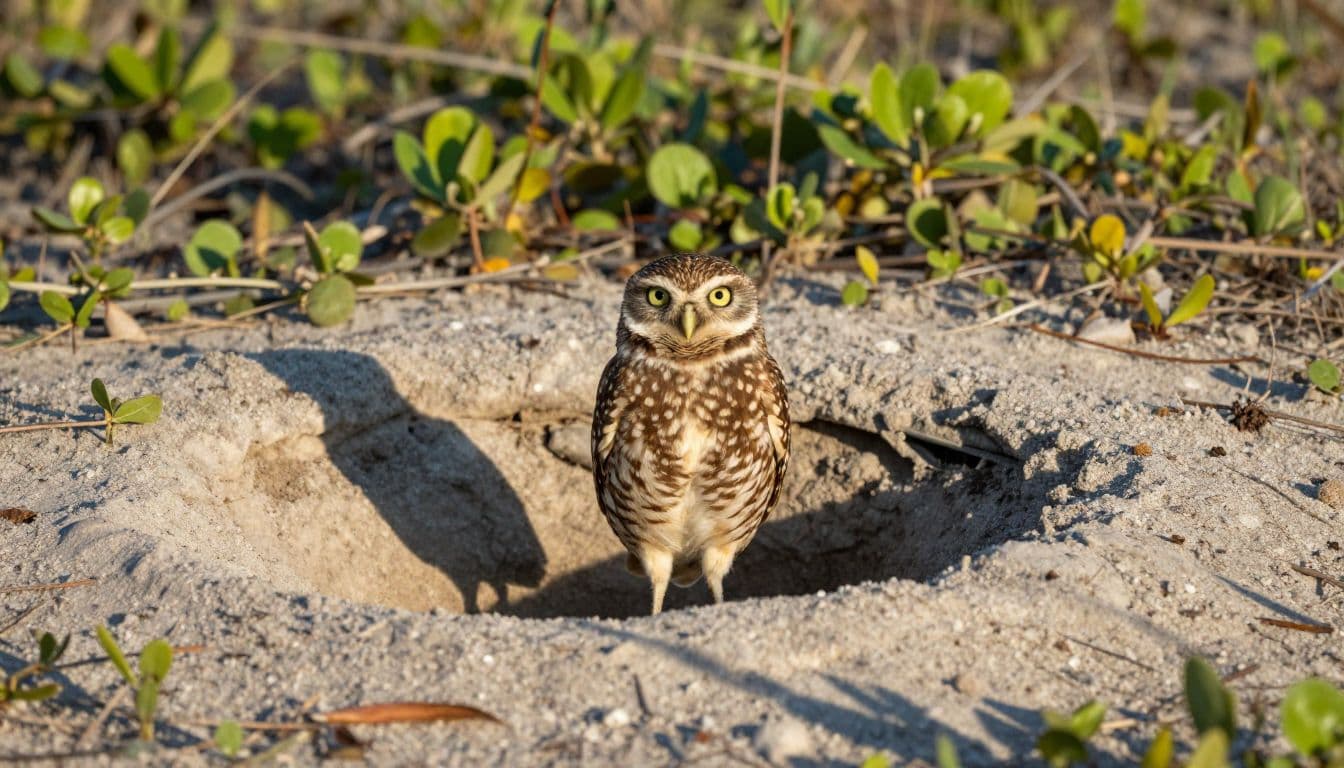
The Florida burrowing owl is a small, long-legged owl that spends much of its time on the ground. Unlike most owls, it often hunts, rests, and watches for danger beside an underground burrow. The species may use natural cavities, but in Cape Coral, many burrows sit in vacant lots, grassy areas, residential lawns, or other developed spaces.
Cape Coral's population is part of the Florida subspecies, Athene cunicularia floridana. The owl is listed as state-threatened, and state and local rules protect both the bird and its burrow. The Florida Fish and Wildlife Conservation Commission explains the species' protected status and reporting options in its guide to Florida burrowing owls.
A burrow is more than a hole in the ground. It is a shelter, nesting site, escape route, and place where young owls develop. Even when no owl is visible, an inactive-looking burrow may still need protection. Cape Coral guidance states that residents and builders can't destroy a burrow without the required permission.
An empty-looking burrow may still be protected. Never assume that no visible owl means no active habitat.
Cape Coral Burrowing Owl Habitat and Burrow Signs
Burrowing owls prefer open ground with short vegetation. They need a clear view across the area so they can detect predators, people, vehicles, and other threats. Tall grass, thick shrubs, stored materials, and new structures can limit that view and make a burrow less suitable.
Look for an owl standing upright near a sandy entrance. Adults often have mottled brown feathers, pale facial markings, and bright yellow eyes. Young owls may appear outside the burrow before they can fly well. You might also notice a white PVC marker, a small perch, or other signs placed near a known nest.
Markers help people spot burrows before mowing, landscaping, or construction begins. They don't give visitors permission to cross a lot or approach the entrance. Treat every marker as a reminder to stop, observe, and keep clear.
Cape Coral's protection rules use seasonal buffers around the burrow:
- During nesting season, February 15 through July 10, construction activity must stay at least 33 feet away when eggs or flightless young are present.
- During the non-nesting season, July 11 through February 14, the construction buffer is generally 10 feet.
- A burrow can't be filled, damaged, or destroyed simply because an owl isn't visible.
These construction distances aren't a target for wildlife viewing. Visitors should keep farther away whenever possible. The city's burrowing owl permitting FAQ provides additional information about surveys, permits, and protected burrows.
Cape Coral Burrowing Owls Viewing Etiquette
A good wildlife visit should look uneventful to the owl. If the bird keeps feeding, preening, resting, or standing normally, your distance is probably working. If it becomes tense, retreats underground, bobs repeatedly, or watches you instead of its surroundings, move back.
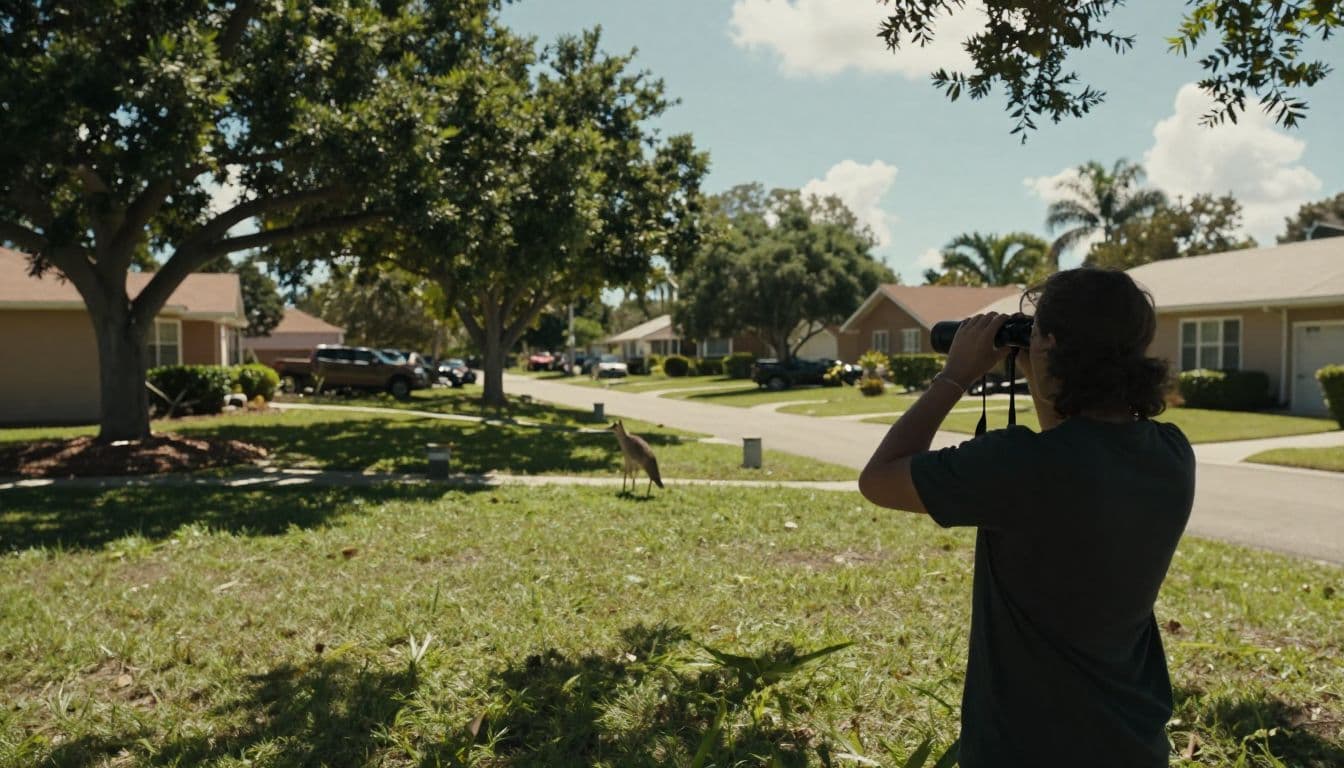
Local Cape Coral viewing guidance recommends staying at least 33 feet away when watching or photographing a burrowing owl. Use zoom rather than walking closer. Never crouch beside the entrance, stand behind the mound, or position yourself where the owl has to pass you to reach shelter.
Stay on public sidewalks, roads, and paths where allowed. Many burrows sit beside private homes or on privately owned lots, so don't enter a yard, driveway, or vacant property without clear permission. Also avoid parking in someone's yard, blocking a driveway, or stopping where your vehicle interferes with traffic.
Keep your visit short, especially near a nest. A quick look with binoculars is less disruptive than a long photo session that keeps the owl alert. Avoid flash photography, loud voices, music, and recorded owl calls. Playback can draw a bird away from normal behavior or cause unnecessary stress.
Never try to improve the photo by moving closer or changing the scene. Don't place decorations, chairs, cameras, signs, food, or other objects near the burrow. Feeding is prohibited and can make wild birds approach people, roads, or pets.
The following rules cover most situations:
- Keep at least 33 feet between you and the owl or burrow.
- Stay outside private property unless the owner gives permission.
- Keep dogs leashed and prevent them from investigating the entrance.
- Don't touch, block, decorate, fill, or probe the burrow.
- Don't throw rocks, chase the owl, call it toward you, or try to catch it.
- Leave if the owl changes its normal behavior because of your presence.
How to Watch Without Disturbing the Habitat
Binoculars are the best choice for casual viewing. A camera with a longer lens lets you capture details while staying well beyond the burrow's entrance. Keep your equipment simple, and avoid setting up a tripod where it could block a sidewalk, driveway, or the bird's route.
Morning and late afternoon can offer comfortable viewing conditions, but owls may appear at different times. Weather, traffic, lawn care, and nearby activity all affect what you see. Don't keep returning to the same nest throughout the day if the bird is hiding.
Roadside burrows need extra care. Stand well away from traffic, never step into the street for a photograph, and keep children close. A safe viewing point is more important than a perfect angle.
If you don't see an owl, enjoy the habitat without searching every corner. Walking across a lot, lifting markers, moving brush, or checking the hole can damage the tunnel and disturb animals below ground. Wildlife viewing rewards patience, not persistence at any cost.
Visitors and residents can also protect owl habitat by reporting a newly discovered burrow before mowing or construction affects it. Property owners should use local guidance before trimming vegetation or changing the area around an entrance.
For visitors with a full schedule, 1st Class Delivery offers a VIP-style convenience service for groceries, meals, household items, errands, and airport transportation. Their Cape Coral delivery services can handle routine pickups while you spend your time enjoying Southwest Florida or caring for your home.
What to Do About an Injured Owl or Damaged Burrow
Keep your distance if an owl appears injured. Don't pick it up, offer food, pour water into the burrow, or try to move the bird. Keep people and pets away, then contact a wildlife professional.
Cape Coral directs reports of injured or wounded owls to Clinic Rehab of Wildlife, also known as CROW, at 239-472-3644 . Report harassment, damaged burrows, or other violations to the Florida Fish and Wildlife Conservation Commission's 24-hour hotline at 1-888-404-3922 .
If you find a new burrow in an area scheduled for mowing, clearing, or construction, contact Cape Coral's planning department before work begins. Take a photo from a safe distance, note the location, and avoid disturbing the site while you wait for instructions.
Reporting matters because a damaged entrance may hide a larger problem underground. A mower can collapse a tunnel, and heavy foot traffic can compact the sandy soil around the opening. Early notice gives the right agency or property owner a chance to protect the site.
Protecting Cape Coral's Burrowing Owls
Cape Coral burrowing owls live beside people, which makes respectful behavior especially important. Their open habitat may look ordinary, but each marked entrance can support a family, provide shelter, and connect the bird to its feeding area.
Stay at least 33 feet away, remain on public paths, avoid flash and playback, and never enter private property to get a closer view. When the owl doesn't need to react to you, you've given it the kind of visit that protects both the bird and the place it calls home.