Southwest Florida Beach Flags: A Safer Swimming Guide
Southwest Florida beach flags tell you when to use extra caution, avoid swimming, or stay out of closed water. Green means lower hazard, yellow signals moderate conditions, red warns of high hazard, and double red closes the water.
Purple adds a warning about dangerous marine life. Your safest decision also depends on swimming ability, weather, and the beach's surroundings, so treat flags as a starting point .
Start with the color key before deciding whether anyone in your group should swim.
Key Takeaways
- Green flags mean lower hazard, but currents and other risks can still be present.
- Yellow calls for caution, while red conditions make staying on shore the safer choice.
- Double red means the water is closed, and purple warns about dangerous marine life.
- Choose supervised swimming areas when available, keep young children within arm's reach, and never enter a current to attempt a rescue.
What Southwest Florida Beach Flags Mean
Florida's Beach Warning Flag Program uses four colors, with double red providing a separate closure signal. The colors communicate general surf hazards, rather than identifying every danger beneath the surface.
Here's how to translate those warnings into swimming decisions.
| Flag | Meaning | What to do |
|---|---|---|
| Green | Low hazard, generally calm conditions | Use caution and supervise children closely. |
| Yellow | Medium hazard, moderate surf and/or currents | Be cautious; weaker swimmers should stay out. |
| Single red | High hazard, high surf and/or strong currents | Choose shore-based activities instead of swimming. |
| Double red | Water closed to the public | Don't enter the water. |
| Purple | Dangerous marine life | Avoid contact with marine animals and follow posted warnings. |
A single red flag signals high hazard, but it doesn't carry the same statewide meaning as double red. Always obey a posted water closure, regardless of how inviting the shoreline looks.
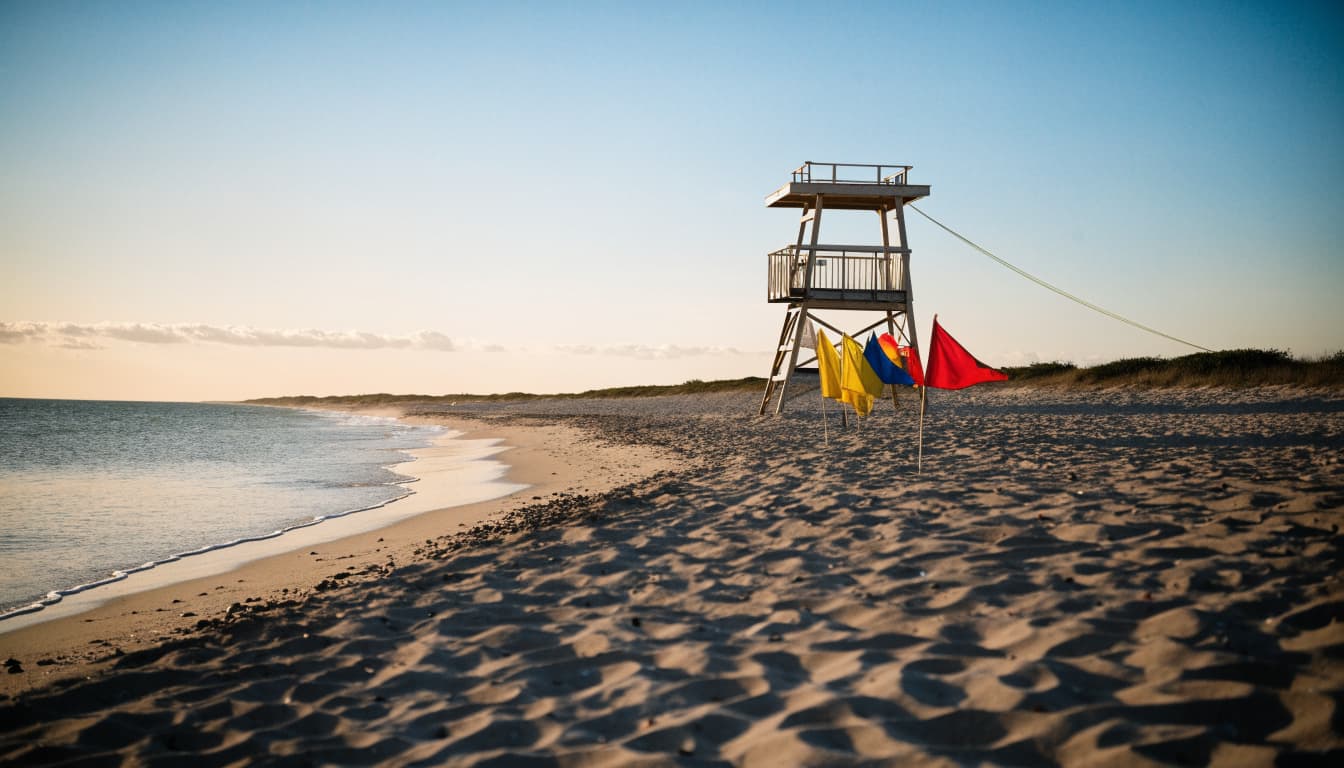
Purple usually flies alongside another flag because marine-life hazards and surf conditions are separate concerns. For example, green and purple together mean lower surf hazard with dangerous marine life present.
The system also has limits. Green doesn't establish that water quality is acceptable, that lifeguards are present, or that every swimmer can handle the conditions.
A green flag describes lower hazard conditions. It doesn't tell you whether a particular child or adult can swim safely there.
Read the posted flag legend at the beach entrance, since it explains the signals used at that location.
Why Calm-Looking Gulf Water Can Be Dangerous
Small waves don't tell the whole story. Water can move forcefully beneath a surface that looks suitable for a casual swim.
Rip currents can be hard to recognize
Rip currents carry water away from shore. They can form where returning water funnels through breaks in sandbars or around shoreline structures.
NOAA's rip current overview describes these currents as powerful streams moving toward the open ocean. They can carry swimmers beyond comfortable standing depth.
Sometimes a rip appears as a darker channel, churning water, or a gap between breaking waves. However, these clues aren't always obvious. Don't choose a swimming spot simply because one patch has fewer breaking waves.
Tides, passes, and weather change the risk
Tidal water moving through narrow passes creates a different problem from ordinary beach surf. Near an inlet, water can move quickly even when nearby sand looks peaceful.
Breaking waves can also knock people down in shallow water. Meanwhile, an alongshore current may move swimmers away from where they entered.
Wind and storms can change conditions during your visit. Leave the water when thunder sounds and move into a substantial building or hard-topped vehicle.
A beach umbrella doesn't provide safe lightning shelter. Wait at least 30 minutes after the last thunder before returning outdoors, even if sunshine has returned.
Local Beach Conditions and Lifeguards Matter
A familiar beach name doesn't tell you how much protection or supervision you'll find. Each stretch of shoreline needs its own swimming decision.
Blind Pass deserves extra caution
The county tourism listing for Blind Pass Beach Park warns about swift currents and lists no lifeguard on duty. That combination matters when deciding whether to enter the water.
A scenic setting or good shelling doesn't make a pass a suitable swimming area. Keep children away from fast-moving water, and don't wade deeper to retrieve a drifting toy.
Also, avoid treating another visitor's decision as reassurance. Someone standing offshore may have different swimming skills or may already be struggling with the conditions.
Bowman's Beach requires close supervision
Bowman's Beach also has no lifeguards, so families need to take responsibility for water supervision. Stay close to shore, but remember that shallow water can still contain moving currents.
Our Bowman's Beach visitor guide covers activities beyond swimming. Shelling and time on the sand can keep the outing enjoyable when water conditions aren't suitable.
Keep living animals and occupied shells where you find them. Water shoes can help with rough shells underfoot, but they don't protect against currents or make unsafe wading safe.
What to Do If a Rip Current Catches You
A rip current can exhaust a strong swimmer who tries to swim directly against it. Staying calm helps preserve the energy needed to escape or signal for help.
Escape without fighting the current
Don't swim straight toward shore against the flow. Instead, swim parallel to the shoreline to get out of the current, then angle back toward land.
If you can't escape, float or tread water and call for help. Wave an arm when you can do so without losing control of your breathing.
NOAA's guidance on surviving a rip current emphasizes avoiding a fight against the moving water. Keep your effort focused on staying afloat rather than forcing your way back along the same path.
Help someone without becoming another victim
Alert a lifeguard immediately if one is present. Otherwise, call 911 and give the beach name, nearest access point, and the person's location.
Throw a flotation device if one is available. Keep watching the person so you can direct rescuers.
Don't enter the current to attempt an untrained rescue. A distressed swimmer may pull a helper underwater, and the same current can overwhelm both people.
Knowing the nearest beach access point before an emergency makes it easier to describe your location clearly.
Practical Steps for a Safer Beach Day
A little preparation gives your group more options when swimming conditions change. Pack for a beach outing that can still work without entering the Gulf.
Match supervision and equipment to your group
Assign a sober adult to watch children continuously, without a phone or another distracting task. Keep young children and weak swimmers within arm's reach.
A properly fitted, U.S. Coast Guard-approved life jacket adds protection for weak swimmers. Inflatable toys, pool floats, and water wings aren't substitutes.
Bring drinking water, sunscreen, hats, and any needed medication. Shade breaks help prevent fatigue, which can make swimming harder.
NOAA's rip current forecast distinguishes low, moderate, and high risk. High risk means swimming conditions are unsafe for all skill levels, so plan to stay out.
Leave room for a dry-land beach day
Don't let parking costs, a long drive, or an excited child pressure you into swimming. A shoreline walk or picnic can still make the trip worthwhile.
Our family activities on Sanibel offer alternatives when the water isn't suitable. Keep plans loose enough for snacks, shade, and an earlier departure.
At 1st Class Delivery, we offer a VIP-style way to leave errands off your schedule. We handle grocery shopping, food pickup, and household errands so you can spend vacation time, or everyday life, enjoying Southwest Florida.
Frequently Asked Questions About Beach Flags
Can you swim when there's a yellow flag?
Yellow means moderate surf and/or currents. Some capable swimmers may manage those conditions, but children and weak swimmers should take a more conservative approach.
If waves knock you off balance or moving water makes standing difficult, leave the water. A yellow flag doesn't establish a safe depth or distance offshore.
Does a purple flag mean the beach is closed?
Purple warns of dangerous marine life; it isn't the water-closure signal. Double red means the water is closed to the public.
A purple flag can accompany green, yellow, or red. Consider both warnings together, and don't assume small waves mean there is no marine-life hazard. Avoid touching unfamiliar animals, including jellyfish washed onto the sand.
What if there's no flag flying?
No flag means you don't have that warning information. It doesn't mean the water is safe or that someone is monitoring swimming conditions.
Avoid entering unfamiliar water when you can't judge the hazards. For families with weak swimmers, choosing a shore-based outing is a reasonable decision. Missing warning equipment shouldn't become a reason to lower your caution.
Let Conditions Set the Plan
Southwest Florida beach flags help you make a swimming decision, but they work best alongside close supervision and attention to changing conditions. Staying out of the water is the right choice whenever hazards exceed your group's abilities.
Give yourself permission to enjoy the shore without swimming. A good beach day doesn't require entering the Gulf, and no vacation plan is worth ignoring a warning.