Caloosahatchee Regional Park: Trails, Wildlife, and Tips
Some Southwest Florida outings are planned around a trailhead, not a beach. At Caloosahatchee Regional Park , pine flatwoods, wet areas, and river country create a setting for hiking, biking, horseback riding, birding, paddling, and primitive camping.
That variety makes planning important. Park hours, parking fees, trail direction, seasonal flooding, the no-dog rule, and temporary closures can all affect your visit. This guide uses current Lee County information for August 2026 and adds practical advice for enjoying the park safely.
Know before you go
Caloosahatchee Regional Park is at 19130 North River Road in Alva, Florida. These are the main details to check before leaving:
| Detail | Current information |
|---|---|
| Park hours | Dawn to dusk |
| Parking lots 2 and 3 | 7 a.m. to 5:45 p.m. |
| Parking fee | $1 per hour or $5 per day |
| Annual pass | Lee County annual parking passes are accepted |
| Dogs | Not permitted |
| Motorized vehicles | Not permitted beyond paved parking lots |
| Primitive camping | $15 family, $30 group, $50 equestrian site |
The campground gate at Parking Lot 1 follows a separate seasonal schedule. If you plan to arrive late, camp overnight, or use a particular entrance, review Lee County's park information before driving.
Caloosahatchee Regional Park trails: pick the right route
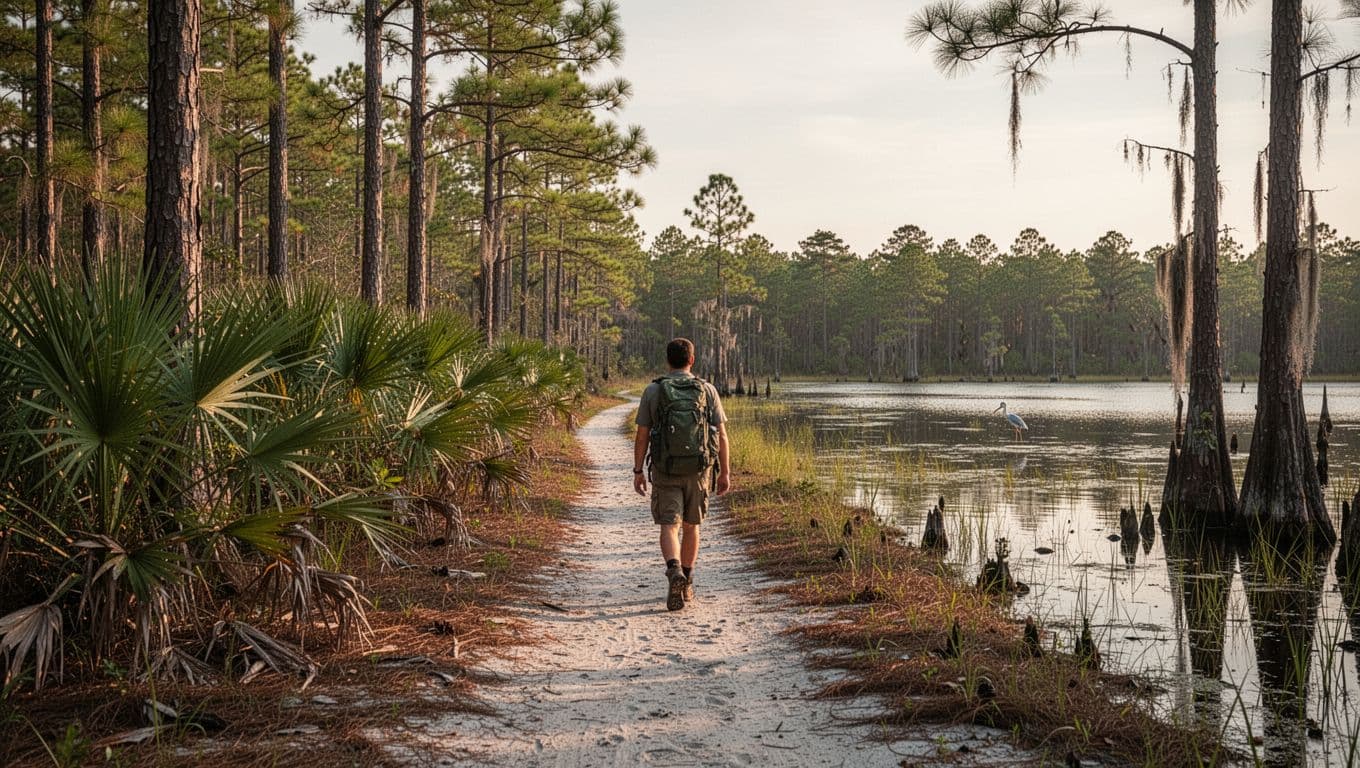
The park's recreation areas include hiking trails, a jogging and walking path, mountain bike trails, and equestrian routes. Pine trees, palmettos, open wet areas, and river-side sections create changing conditions as you move through the property.
Walking and hiking routes
Hikers should plan for sandy ground, exposed sun, roots, and damp low spots. Lightweight hiking shoes may work during dry weather, but shoes with firm tread are a better choice after rain.
The river-side portions deserve extra attention. Trail references note that sections near the river can flood during high water. Check the forecast, carry drinking water, and avoid stepping into standing water when you can't see the trail surface.
Early morning usually offers cooler temperatures and better wildlife-watching conditions. It also gives you more time before the afternoon heat builds. Bring insect repellent, sun protection, and a charged phone, since natural areas can feel remote even when the parking lot is nearby.
Mountain bike and equestrian trails
The North Side Mountain Bike & Equestrian Trails are single-track routes that operate counter-clockwise only . Riders should follow posted direction signs and stay on designated routes rather than creating shortcuts through vegetation.
Because motorized vehicles can't travel beyond the paved parking lots, visitors should unload bikes and gear in approved areas. Equestrian visitors also need to prepare for changing trail conditions, especially after heavy rain. A muddy route can take longer and may require a different plan.
Wildlife watching at Caloosahatchee Regional Park
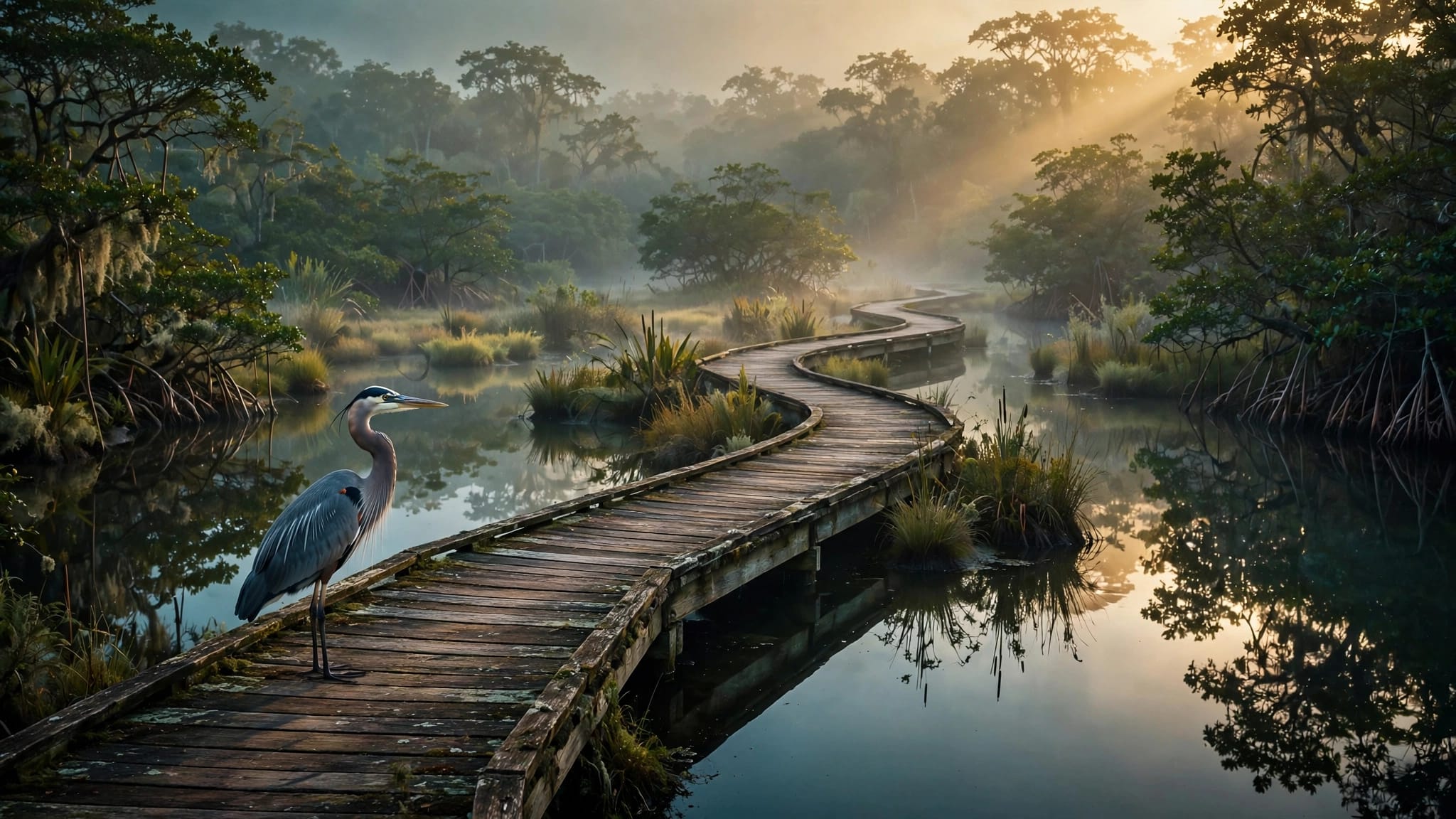
Bird watching is one of the park's listed activities, and the area provides a mix of habitats that attracts different species throughout the day. Open water and wet ground may draw wading birds, while pine edges and scrub provide cover for smaller birds and other wildlife.
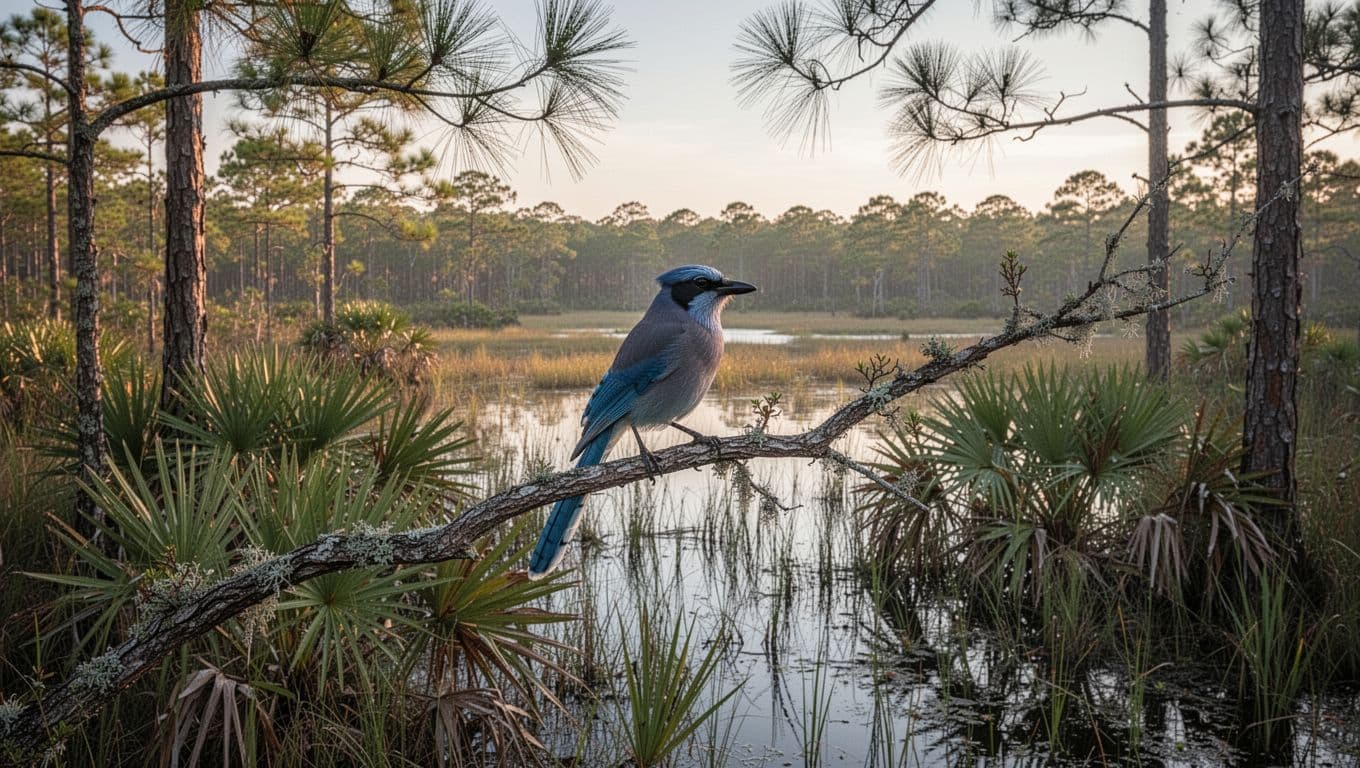
Wildlife varies with season and conditions, so pictured species should be treated as a habitat example rather than a guaranteed sighting.
Where to look for animals
Scan slowly near wet areas, tree lines, and open clearings. Birds often reveal themselves through movement or calls before they become visible. Binoculars can make a short stop more rewarding without requiring you to approach an animal.
The best sightings may happen when you pause instead of constantly walking. Stand quietly beside the trail, keep your eyes moving, and give wildlife time to return to normal behavior. Dawn and the hours before sunset often provide softer light and more comfortable temperatures, although the park closes at dusk.
Wildlife etiquette matters
Keep a generous distance from every animal. Never feed wildlife, touch young animals, or disturb nests, eggs, burrows, or resting areas. Avoid loud music and wildlife-call playback, which can disrupt feeding and nesting behavior.
If you encounter an alligator or another large animal near the trail, give it space and choose a safe route around it. Never block an animal's path to the water. Since dogs aren't allowed at this park, visitors should leave pets at home rather than assuming they can remain in a vehicle or at a campsite.
Hours, fees, and trail conditions
Plan around the gates
Lee County lists the overall park schedule as dawn to dusk. For Parking Lots 2 and 3, the current information lists gate hours of 7 a.m. to 5:45 p.m. The campground entrance uses a different seasonal schedule, so overnight visitors shouldn't rely on the hours for the day-use lots.
Parking costs $1 per hour or $5 for the day. A Lee County annual parking pass is valid at this location. Keep the payment and arrival plan simple by deciding how long you'll stay before entering, especially if you want to hike, paddle, and visit the wildlife-viewing areas in one trip.
Check conditions before leaving
Rain can change sandy trails quickly, and high water can affect routes near the river. After a storm, expect muddy sections, standing water, fallen branches, or slower riding conditions. Wear shoes that can handle moisture and carry a small towel or change of clothes if you plan to paddle.
Lee County can close part of a park temporarily to protect visitors, public health, safety, or natural resources. Check current Lee County park updates before leaving, and review the park's local Facebook page for additional notices. You can also call Lee County Parks & Recreation at (239) 533-7421 when a closure or gate question could affect your plans.
Camping and paddling options
Caloosahatchee Regional Park works well for visitors who want more time outdoors than a single walking loop allows. Primitive camping and water access add flexibility, but both require advance planning.
Primitive camping details
Lee County lists primitive tent camping at $15 for a family site, $30 for a group site, and $50 for an equestrian site. Check-in begins after 12:01 p.m., and check-out is by 11 a.m. Quiet hours run from 10 p.m. to 7 a.m. every night.
Each family campsite receives two complimentary parking passes. Group and equestrian sites receive four. Extra vehicles pay the $5 daily parking rate, with cash or check required for those additional passes.
Pack food, water, lighting, insect repellent, and supplies for a site without typical hotel conveniences. Campers should also confirm gate access before arriving, since campground hours vary by season.
Kayaking and fishing
The park includes a paddlecraft landing or launch, fishing areas, a pier or dock, and viewing areas. Lee County lists kayak rentals from 9 a.m. to 3 p.m. daily. Rentals are listed at $15 per hour or $40 per day and include paddles and life jackets. Exact change is requested.
Ask about same-day rental availability before building your entire schedule around a kayak trip. Water levels, weather, and park operations can affect access. Anyone paddling should wear the provided life jacket, stay aware of boat traffic, and avoid launching during unsafe conditions.
Make the outing easier from nearby communities
A park visit can take most of a day, especially when you add driving, food stops, grocery shopping, or airport timing. Visitors staying in Cape Coral, Sanibel, Captiva, Matlacha, or nearby communities may prefer to arrange those errands before heading to Alva.
For people who want to enjoy their vacation or daily life without spending time running errands, 1st Class Delivery is a VIP option worth considering. The locally focused service can handle grocery shopping, restaurant food pickup, pharmacy items, household needs, and other errands. It also offers local grocery and restaurant delivery, along with airport transportation for travelers who need help before or after their Southwest Florida stay.
Arrange deliveries ahead of time and confirm the exact pickup and drop-off area. That leaves your schedule open for the trail instead of another round of driving.
Conclusion
Caloosahatchee Regional Park rewards visitors who prepare for its conditions. Check the gate schedule, bring water and sun protection, follow the counter-clockwise rule on the mountain bike and equestrian trails, and allow for flooding after heavy rain.
Wildlife watching works best when you slow down and give animals space. With current park information, a flexible route, and a few supplies ready, you can spend less time solving logistics and more time enjoying Alva's pine flatwoods, wetlands, and river country.