Mound Key Archaeological State Park Guide for 2026
An island made from ancient shell deposits sits in Estero Bay, but you can't drive to it. Planning a visit to Mound Key Archaeological State Park means arranging a small-boat trip, checking tide and weather, and carrying everything you need back out.
The payoff is a rare look at a major Calusa archaeological site surrounded by mangroves, shallow water, and Southwest Florida wildlife. Use this 2026 guide to plan your launch, understand the trail, and avoid the surprises that can turn an easy outing into a difficult one.
Why Mound Key Is Different from Other Florida Parks
Mound Key is an archaeological island in Estero Bay, near Estero and Fort Myers Beach. Its high ground comes from centuries of shell deposits left by the Calusa people, who lived along Florida's southwest coast and built large coastal settlements.
The island's mounds contain layers of shells, fish bones, pottery, and other material from daily life. Vegetation now covers much of the site, so visitors won't see a fully reconstructed village. Instead, the archaeological story appears in the island's raised ridges, shoreline edges, and uneven ground.
The Calusa made extensive use of the area's fish-rich waters. Their society developed around fishing, shellfish, hunting, trade, and control of the coastal waterways. Mound Key is widely identified as one of their major centers and is often described as a former Calusa capital.
European history followed. Spanish settlers established San Antonio de Carlos at Mound Key in 1566. The settlement and later mission activity formed part of Spain's early attempts to establish a foothold in southwest Florida. Archaeological work at the island has helped researchers piece together both the Calusa period and the later Spanish presence.
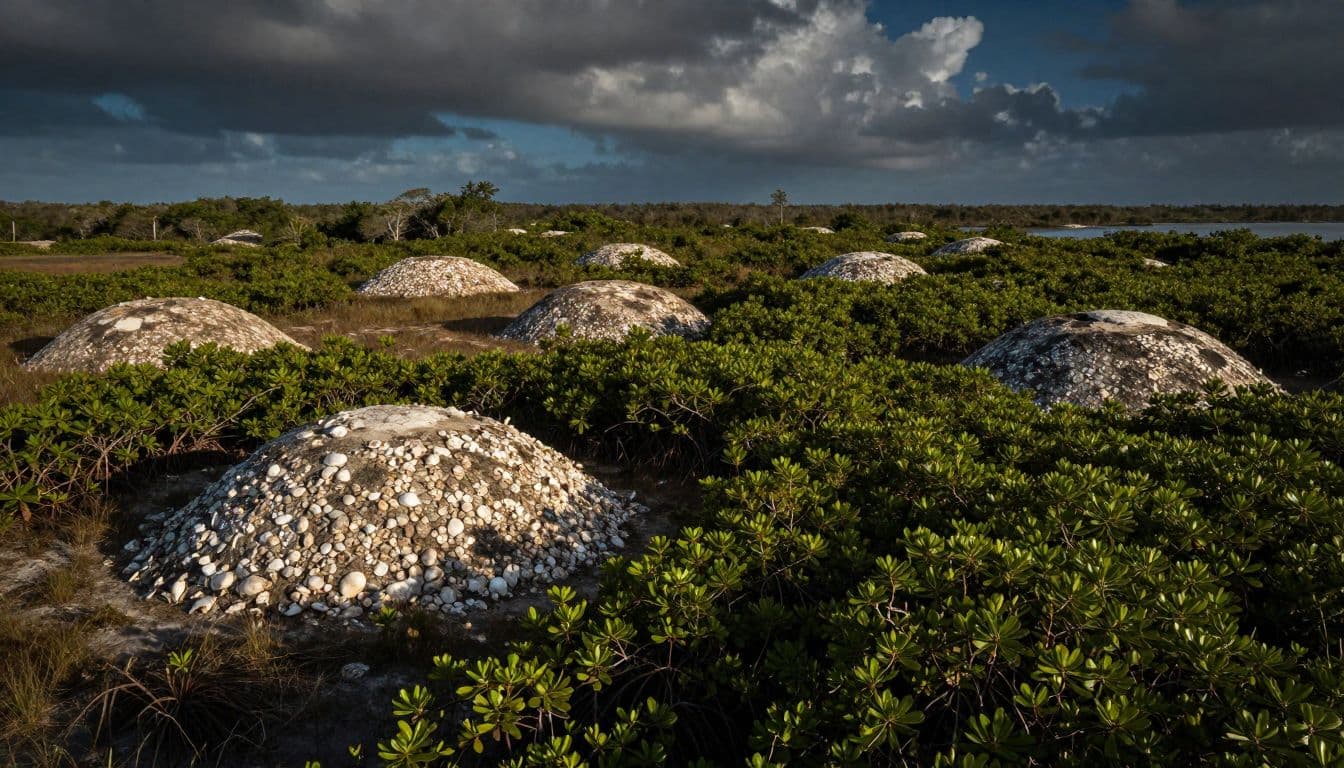
Mound Key is also different because the visit begins on the water. There is no road, bridge, visitor center, restaurant, restroom, or regular supply point on the island. The site feels remote even though it lies close to developed communities.
The archaeological site starts at the shoreline. Your boat, water, food, and safety equipment need to be ready before you leave the launch point.
The official Florida State Parks paddling guide is a useful reference before you go. Still, call ahead for current conditions because shoreline access and shallow-water routes can change.
Mound Key Archaeological State Park Access in 2026
Florida State Parks describes Mound Key as accessible only by watercraft. Visitors typically launch from Koreshan State Historic Site in Estero or Lovers Key State Park near Fort Myers Beach.
The island has two boat landings. The northwest landing is more suitable for small powered watercraft, while the southeast landing is better suited to canoes and kayaks. There are no conventional boat docks, so visitors must beach their craft at the shoreline.
| Planning detail | 2026 information |
|---|---|
| Access | Boat only |
| Main launch areas | Koreshan State Historic Site or Lovers Key State Park |
| Suitable craft | Kayaks, canoes, and smaller shallow-draft boats |
| Island facilities | None |
| Park fee | No fee required for Mound Key |
| Open hours | Daylight hours, generally sunrise to sunset |
| Trail | About one-half mile between the two landings |
The park itself doesn't require an admission fee, but the launch location may have its own entrance charge, parking rules, rental fees, or operating hours. Confirm those details before setting out.
Choosing a Launch Point
Koreshan State Historic Site is at 3800 Corkscrew Road in Estero. Its phone number is 239-992-0311. Lovers Key State Park is at 8700 Estero Boulevard in Fort Myers Beach, and its phone number is 239-463-4588.
Your choice depends on your boat, paddling experience, and preferred route. Lovers Key is a common starting point for kayakers. One local route description places the trip at roughly five miles round trip, including an open-water crossing. Read the Florida Rambler route description for Mound Key before deciding whether that distance matches your group.
Koreshan can be more convenient for travelers staying inland around Estero or Bonita Springs. Lovers Key may fit better into a Fort Myers Beach itinerary. Neither option removes the need to check water conditions.
Florida State Parks recommends contacting Koreshan State Park at 239-992-0311 before visiting. Ask about the condition of the landings, current water access, and any temporary restrictions. That call matters because unofficial online reports sometimes conflict with the state's current description of the park.
What Boat Access Really Means
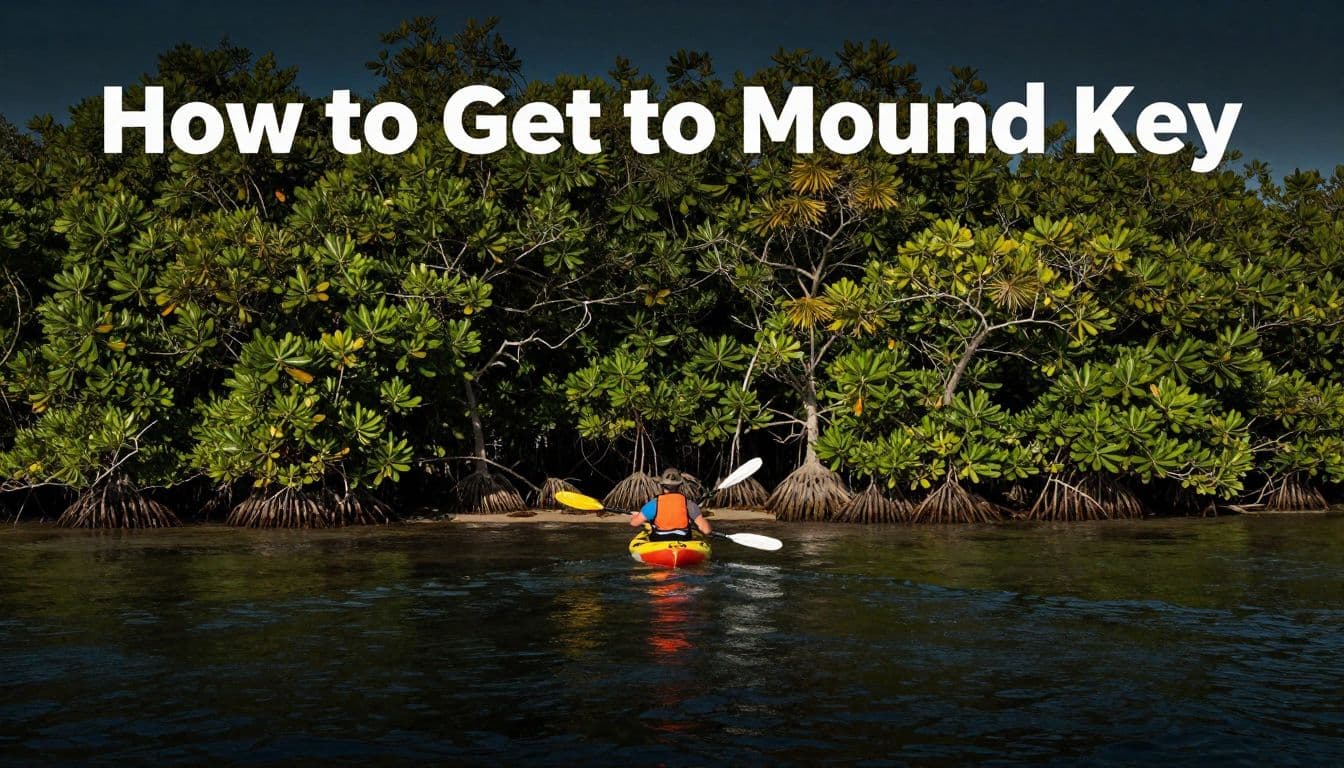
A kayak or canoe is usually the simplest way to reach Mound Key. Small boats with shallow drafts may also work, especially near the northwest landing and at a suitable tide. Large boats should not be part of your plan because the island has no docking facilities.
You'll need to approach carefully, beach the craft, and step onto the shore. Wear footwear that can handle wet sand, shells, mud, and uneven ground. Keep your boat secure but don't block the landing for other visitors.
Paddlers should allow extra time for wind, tide, and route-finding. Estero Bay can look calm near shore while open sections become harder to cross. If the forecast calls for strong wind, thunderstorms, or rough water, postpone the trip.
What You'll See on the Island
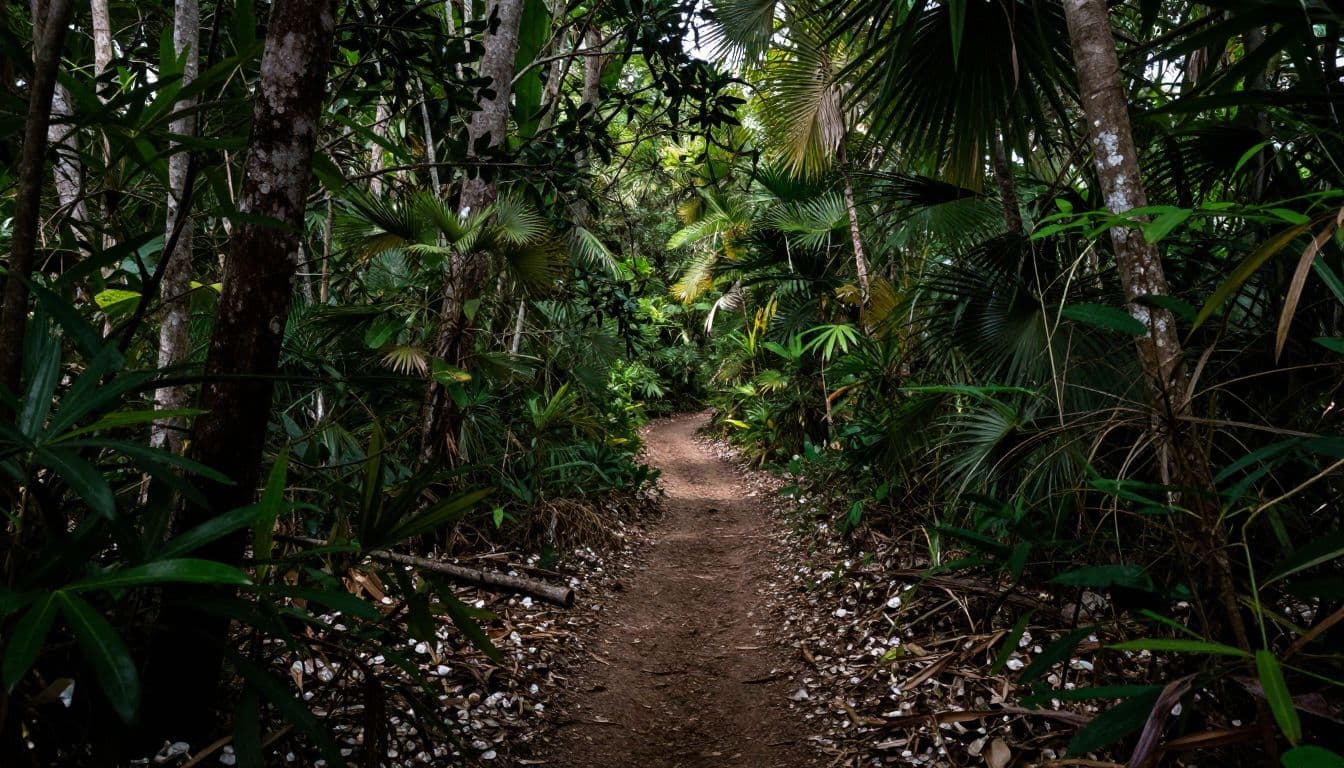
The island's nature and interpretive trail runs for about one-half mile between the two boat landings. This isn't a paved park path. Expect a narrow, uneven route with shell-based ground, exposed roots, sand, and sections shaded by tropical vegetation.
The trail lets you see how the shell mounds shape the island. Some areas rise noticeably above the surrounding mangroves, while other deposits blend into the forest floor. Read the terrain slowly. The site's meaning is easier to understand when you notice the difference between natural shoreline and raised archaeological ground.
There are no restrooms, potable water fountains, food stands, or trash services on Mound Key. Bring everything you'll need for the visit, and carry every item back to your launch point. Even a small snack wrapper can damage the character of an archaeological site.
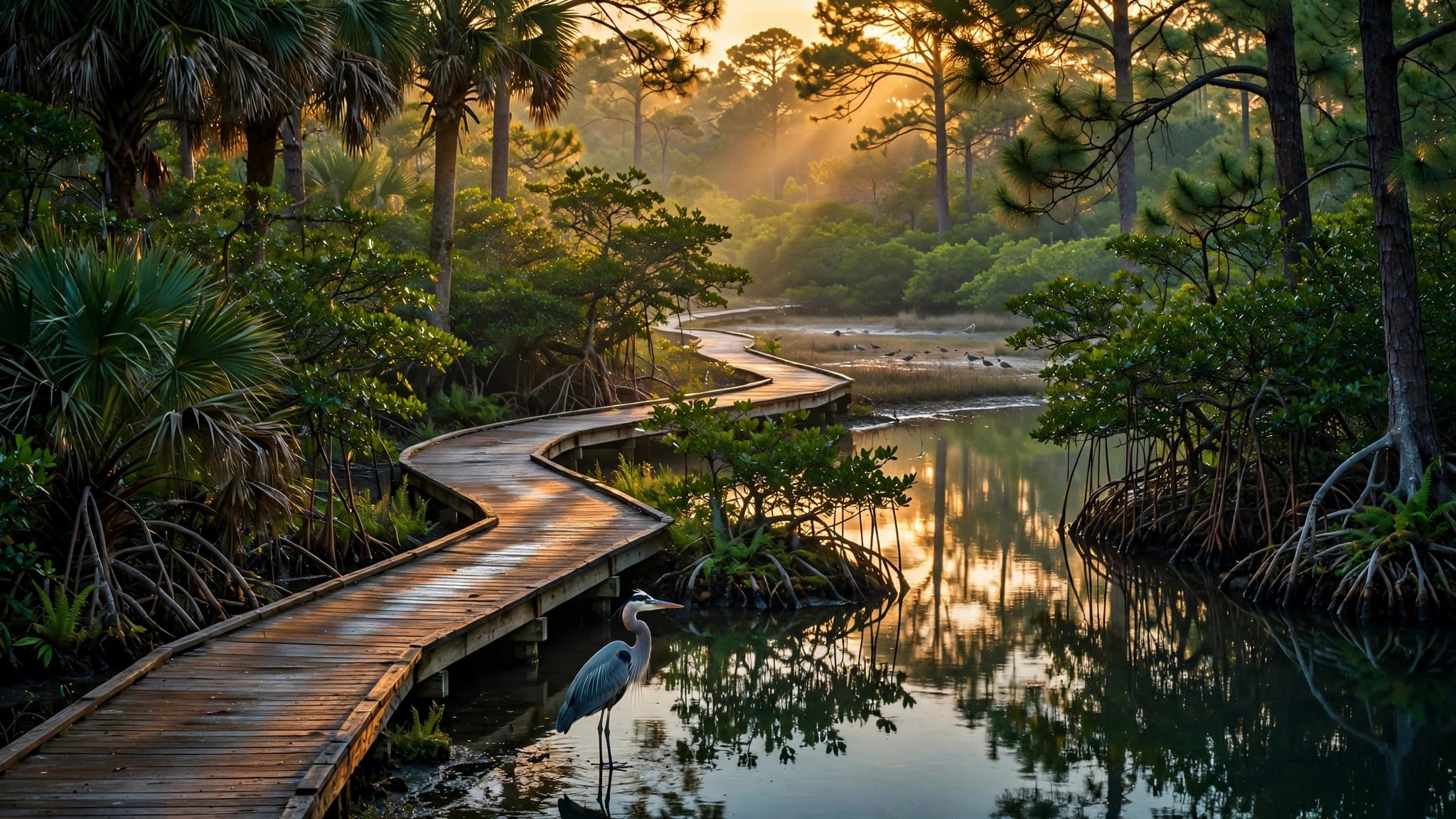
Wildlife adds another layer to the trip. Depending on the season and water conditions, you may see wading birds, ospreys, dolphins, manatees, or fish moving through the shallows. Keep your distance, avoid feeding animals, and let wildlife move through the area without interference.
The trail and landing areas can be difficult for visitors with limited mobility. Reaching the island requires transferring into a small boat or paddling craft, and the ground may be unstable underfoot. Contact the launch site before visiting if someone in your group needs specific access information.
The Calusa History Behind Mound Key
The Calusa built their communities around the water. They developed strong fishing techniques and used coastal resources with detailed knowledge of tides, channels, seasons, and marine life.
Over generations, discarded shells and other materials accumulated around their homes and activity areas. Those deposits eventually formed the raised mounds that define Mound Key. The island is therefore both a place people lived and a physical record of how they used Estero Bay.
Shell mounds can look simple from a distance. Up close, their layers reveal a long history. A shell is not only a natural object at this site. It may be part of an archaeological deposit that helps researchers understand diet, trade, settlement patterns, and the age of different areas.
The Calusa also used canals and waterways to move through the region. Mound Key's position within Estero Bay gave the community access to protected channels and productive fishing grounds. Its location helped connect the island to other settlements along the coast.
Spanish activity changed the island's history. In 1566, Pedro Menéndez de Avilés established San Antonio de Carlos at Mound Key. The site later experienced mission activity and the tensions that accompanied Spanish contact with the Calusa. Disease, conflict, shifting colonial priorities, and the decline of Calusa power all affected the region.
Visitors won't find a recreated Spanish fort or a reconstructed Calusa house waiting on the island. The value comes from seeing the actual place and understanding the layers beneath the vegetation. Interpretive signs and the island's shape provide clues, but the site rewards visitors who arrive with some background.
Never remove pottery fragments, shells, bones, plants, or other objects. Even a small item can lose its archaeological value when separated from its original location. Photograph what you see and leave the island unchanged for the next visitor.
When to Visit Mound Key
The most comfortable months are usually November through April, when Southwest Florida tends to have lower humidity and fewer afternoon thunderstorms. Winter mornings often offer cooler temperatures and calmer water, although wind can still affect an open crossing.
May through October brings heavier heat, higher humidity, and a greater chance of afternoon storms. An early start can help, but check the forecast before launching. A storm that forms after you reach the island can make the return trip unsafe.
Tides matter throughout the year. Shallow water may become difficult for a small motorboat or kayak at low tide, while wind can push water into or out of the bay. Ask the launch site about the day's conditions instead of relying on a general tide prediction.
Florida State Parks materials use slightly different wording for the park's hours, including sunrise to sunset and 8 a.m. until sunset. Plan for a daylight visit, and verify current hours before leaving. Since the island has no lighting or visitor services, don't treat sunset as a flexible departure time.
A half-day schedule works well for most visitors. Allow time for launching, paddling, landing, walking the trail, taking breaks, and returning before weather or light changes. Rushing across the bay reduces both safety and the quality of the visit.
What to Bring for a Safe Visit
Because Mound Key has no facilities, preparation matters more than it does at a developed park. Pack for a self-contained outing and protect anything that can't get wet.
Bring:
- A properly fitted personal flotation device for every person.
- More drinking water than you expect to use.
- Food or snacks in a sealed dry bag.
- Sunscreen, a brimmed hat, sunglasses, and insect repellent.
- Water-resistant footwear with solid traction.
- A dry change of clothes and a small first-aid kit.
- A charged phone in a waterproof case, plus a backup way to navigate.
- A map or route plan that doesn't depend on cell service.
- A small trash bag for every item you carry onto the island.
Keep heavy objects low and secure inside the boat. Loose gear can shift during a turn or open-water crossing. Kayakers should also check that their craft is suitable for the route, their paddles fit properly, and their group knows how to respond if someone capsizes.
Check the weather and tide shortly before departure. Wind direction matters because a route that feels easy on the way out can become tiring on the return. Give yourself enough daylight to leave the island without rushing.
When you reach shore, follow the existing trail and avoid climbing fragile mound edges. Don't dig, move shells, touch exposed artifacts, or use archaeological deposits as seating. Keep boats and gear away from plants and mangrove roots whenever possible.
Solo paddling adds risk because you have no partner to help with a damaged boat, injury, or sudden weather change. Groups should tell someone on land where they are going and when they expect to return.
Pair Mound Key with a Southwest Florida Stay
Mound Key works best as a planned water day, not as an unplanned stop between airport pickup, lunch, and shopping. Choose your launch point first, then build the rest of the schedule around travel time and weather.
Visitors staying in Estero, Bonita Springs, Fort Myers Beach, Sanibel, Cape Coral, or nearby communities can create a flexible itinerary. Spend the morning on the water, return with enough time for a meal, and leave room for weather delays. Avoid booking a fixed activity immediately after the paddle.
If you're staying in Cape Coral or nearby Southwest Florida communities, 1st Class Delivery is a VIP-style concierge service for people who'd rather spend their vacation, or everyday time, enjoying life than running errands. Its personal concierge and errand services can help with grocery, restaurant, pharmacy, and other pickups while you focus on planning the bay outing. Confirm current service areas and availability before placing an order.
Airport transportation, lodging check-in, boat rentals, and park launch rules should be coordinated separately. Mound Key has no dock for a charter bus, no place to buy forgotten supplies, and no convenient backup if your group arrives without enough water.
Before the trip, save the phone numbers for Koreshan and Lovers Key. Ask about parking, launch access, rentals, current conditions, and the best landing for your craft. A few minutes of planning can prevent a long drive followed by an unusable launch.
Conclusion
Mound Key Archaeological State Park offers a rare chance to visit a real Calusa shell-mound site in the middle of Estero Bay. The experience depends on water access, so a suitable boat, safe weather, enough supplies, and a daylight schedule are essential.
Call the launch site before you go, choose between Koreshan and Lovers Key based on your route, and treat the island as a fragile archaeological preserve. When you paddle away from the mounds, the best souvenir is a clearer understanding of the people and history that shaped this part of Florida.