Koreshan State Park Guide for Trails, History, and Kayaks
Koreshan State Park is one of those Florida places that gives you more than one reason to stop. You get a historic settlement, shady walking paths, and access to the Estero River, all in one quiet corner of Estero.
That same mix is why the park draws hikers, paddlers, and history fans. As of June 2026, though, the park is under renovation-related closure, so planning ahead matters more than usual.
If you want the latest access details before you drive over, the official Koreshan State Park page is the best place to start.
Koreshan State Park status in June 2026
A relaxing park day starts with knowing what is open. Right now, the most important fact is simple, trails and water access are not available for normal visitor use.
| Area | Current status | What that means for visitors |
|---|---|---|
| Campground and picnic restrooms | Closed | Overnight stays and those facilities are unavailable |
| Boat ramp and parking | Closed | No kayak, canoe, or boat launch access |
| Rentals | Unavailable | Canoe and kayak rentals are not operating |
| Boundary trail river section | Closed | River access through that trail segment is blocked |
| Historic area | Limited access | The settlement remains the park's main historic focus, but tours are paused |
If your day depends on a trail walk or a paddle, check the park page before you head out.
That table may feel like a letdown, but it also sets expectations. Koreshan State Park is still worth understanding, because its history is unusual and its landscape is memorable. When the work finishes and access returns, the same trails and river scenery will be what people come for first.
The Koreshan story that shaped the park
The park began as a utopian community, not a typical Florida homestead. Dr. Cyrus R. Teed founded the Koreshan Unity movement in New York in 1880, then brought the group to Estero in the 1890s. He took the name "Koresh," and his followers built a community around shared work, discipline, and unusual beliefs for the time.
The old settlement still carries that story. By 1894, the community had grown to about 200 followers. It ran like a self-contained village, with a printing facility, boat works, a cement works, a sawmill, a bakery, a store, and a hostelry. Women also held equal rights with men in the community, which was a serious break from the norm of the era.
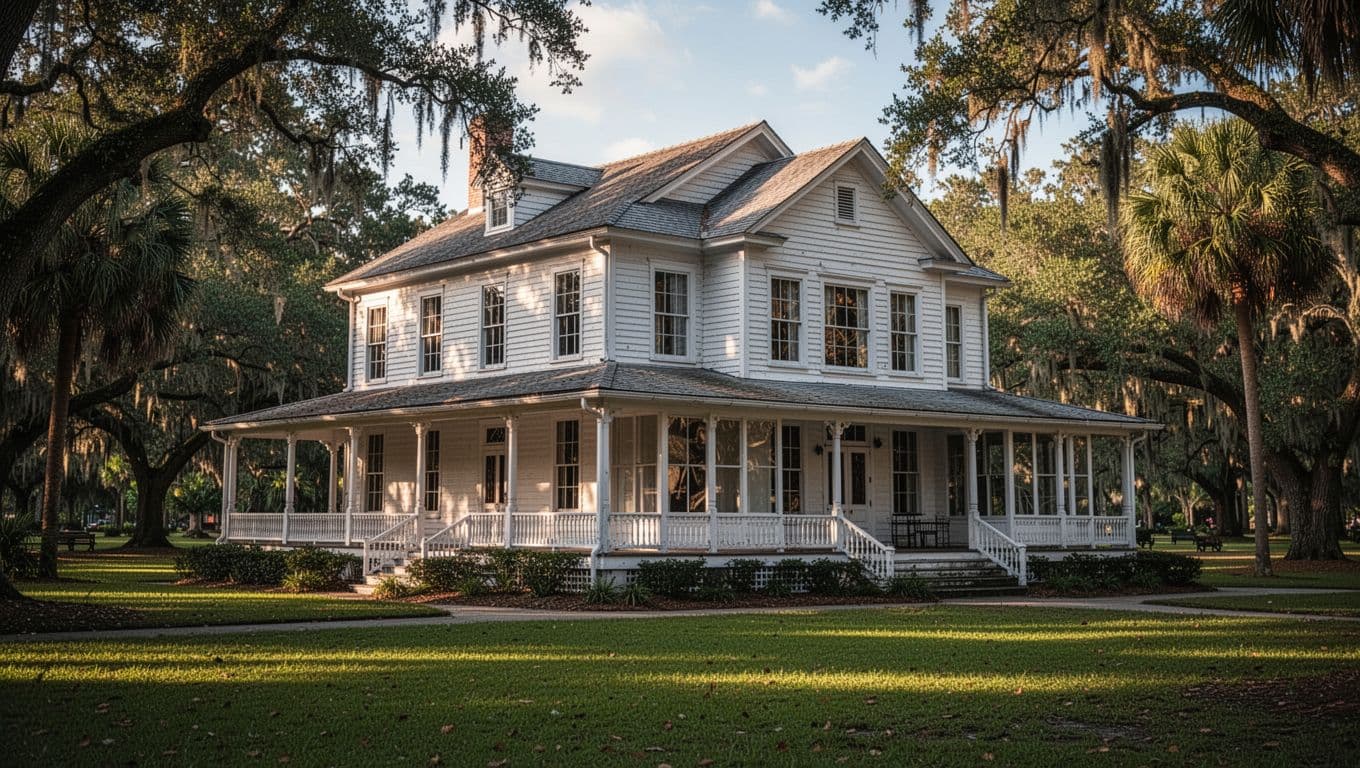
The park's historic core includes 11 nationally registered buildings, which gives the place its own rhythm. Art Hall, built around 1905, is one of the best-known structures and has long been tied to music events, including chamber and Dixieland performances. That mix of architecture and performance makes the site feel lived in, not frozen.
Florida took ownership of the property in 1961, and that move preserved more than old buildings. It protected a story about belief, labor, education, and early settlement life in southwest Florida. In a region often described only by beaches and traffic, Koreshan State Park gives you a different Florida, one built by a small, determined community on the edge of the Estero River.
If you like places where the landscape and the backstory matter equally, this one stands out. The buildings are the surface layer. The bigger draw is the strange, human history behind them.
Trails that make the park worth a slower pace
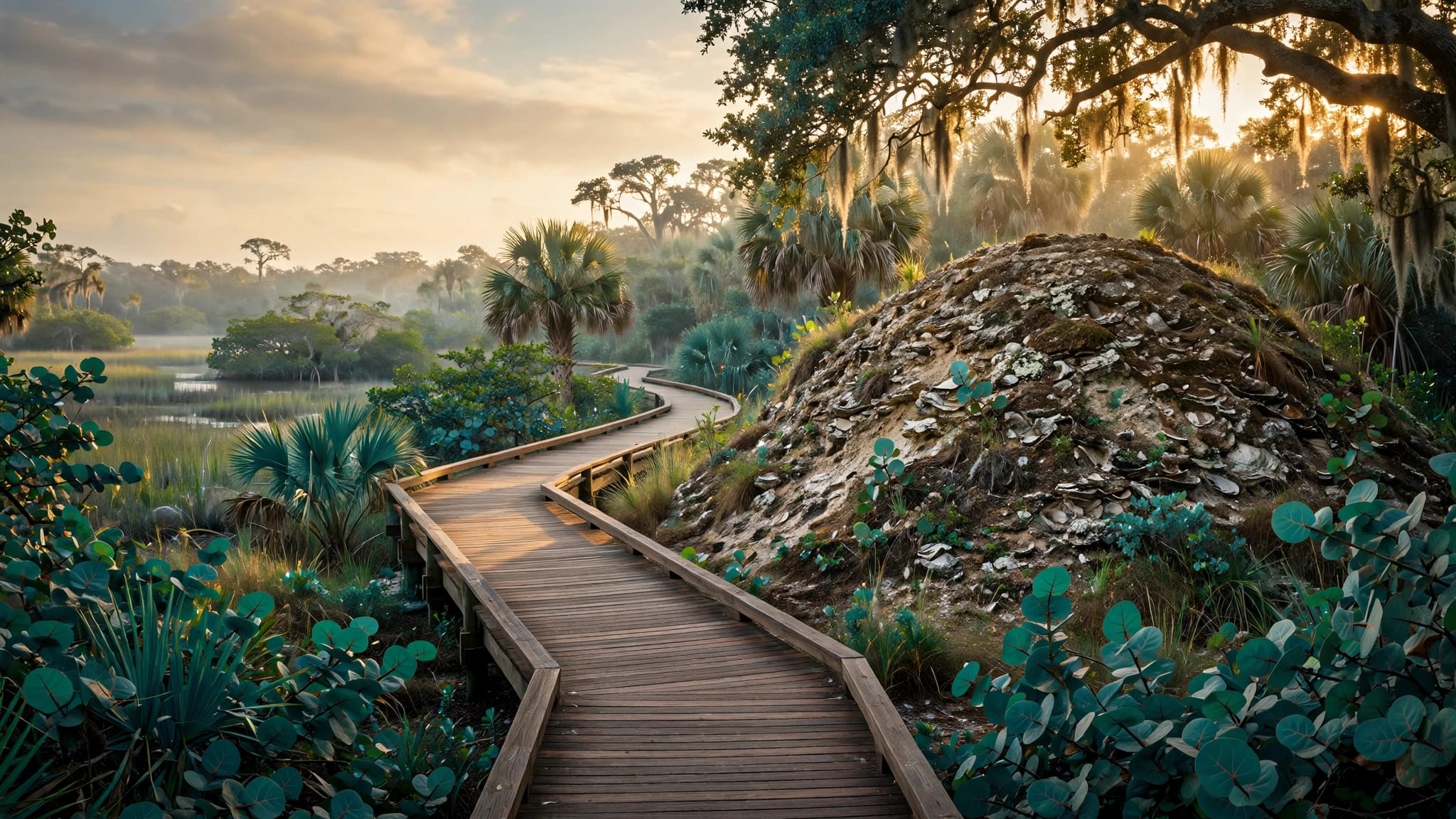
Koreshan State Park is known for trails that feel compact, shaded, and full of texture. Even the easy routes have a sense of place, because the trees, bamboo, and palms do so much of the work.
When the park is open, the best-known route is the Koreshan Nature Trail, a 1.5-mile loop that passes through a bamboo forest planted more than 100 years ago. That grove gives the trail a different feel from the usual pine scrub or open flatwoods you find elsewhere in Florida. The canopy is thicker, the light is softer, and the route feels almost enclosed.
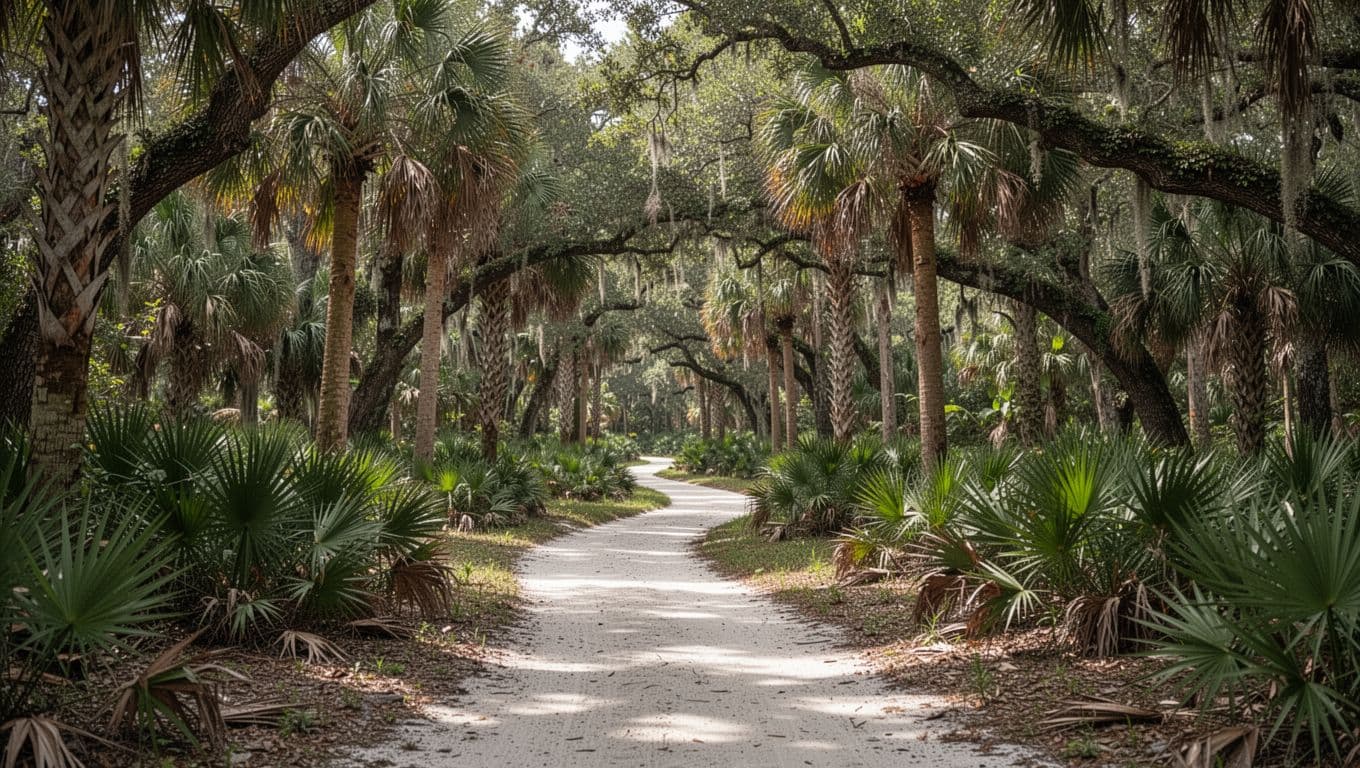
The Estero River Scrub Trail is longer at 2.1 miles and feels more demanding. It moves through a drier, more varied landscape, so the pace changes as the terrain changes. The Boundary Trail cuts through pine flatwoods and gives runners and walkers a quieter way to move through the park grounds.
Wildlife adds to the experience. Birders often look for swallow-tailed kites, bald eagles, and belted kingfishers, while other visitors watch for gray foxes, bobcats, river otters, and alligators in warm months. In cooler weather, manatees can appear near the water. The area also has a lot of mosquitoes, so repellent matters when access returns.
Because the trails sit inside a low, wet, green landscape, they reward patience. These are not hikes where you rush from point A to point B. They are better when you slow down, listen, and let the trail do its work.
During the current closure, those paths are not open for normal visitor use. Still, knowing what they offer helps you plan a future trip. Koreshan's trails are small enough for a half-day visit, but varied enough to feel like several different Florida habitats in one park.
Kayaking the Estero River, when access opens again
The water is a big part of Koreshan State Park's appeal. The Estero River is brackish, which means it carries a mix of fresh and salt water as it moves toward Estero Bay. That mix creates a calmer paddling environment than open Gulf water, yet it still feels alive with tidal movement.
When access is open, paddlers often look for fish like snook, mullet, redfish, and snapper. The route also connects to broader paddling networks, including the Florida Circumnavigational Saltwater Paddling Trail. It is the sort of waterway that rewards an easy pace and a sharp eye for the shoreline.
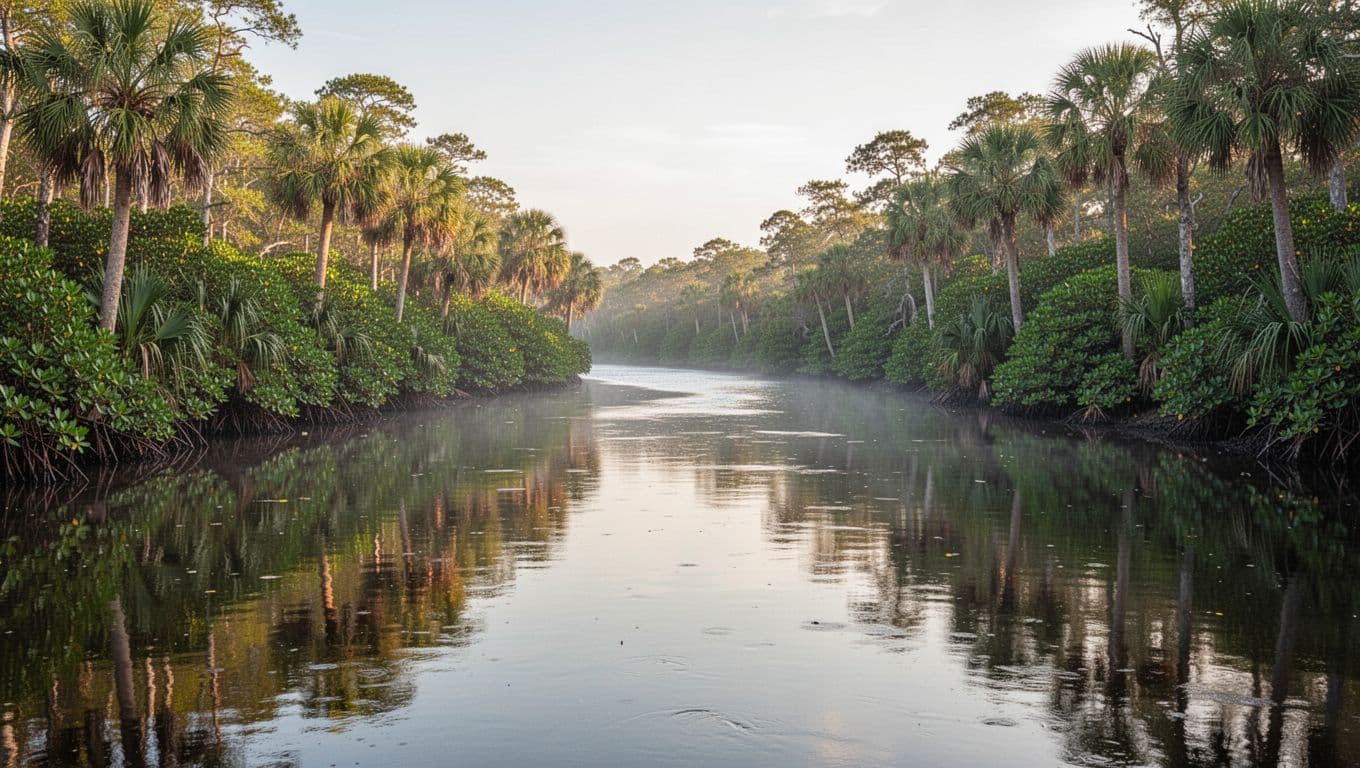
The problem in June 2026 is access. The boat ramp has been closed since late 2025, and rentals are not available. That means no launch day for kayaks, canoes, or small boats right now. The river is still central to the park's identity, but you can't count on paddling it during the current renovation period.
In normal times, the park has offered canoe and kayak rentals, plus guided outings connected to the College of Life. Those tours have taken visitors into the river and, in some cases, toward Mound Key. For a paddler, that kind of trip combines wildlife, history, and a soft current in one outing.
For now, the practical move is simple. Treat Koreshan as a place to check on, not a place to launch from. Once the closure lifts, the river will again be one of the park's strongest reasons to visit.
Planning a quiet day around Estero
When Koreshan State Park is fully open, the visit works best if you keep it simple. The park sits at 3800 Corkscrew Road in Estero, near I-75 exit 123 and US 41, so it is easy to reach from much of southwest Florida.
Normal park hours have been 8 a.m. to sunset, with the ranger station open from 9 a.m. to 5 p.m. Entry fees have also been modest, with rates historically set at $5 per vehicle for two or more people, $4 for one occupant, and $2 for motorcycles, pedestrians, and cyclists. Because renovations are ongoing, those details should be confirmed before any future trip.
A relaxed day here works better with a short packing list:
- Water and electrolytes for the heat and humidity
- Bug spray for mosquitoes near the trails and water
- Sunscreen and a hat for open areas and river edges
- Closed-toe shoes if you plan to walk more than a short distance
- A camera or phone for the buildings, birds, and shaded paths
If you are staying in Cape Coral, Sanibel, Matlacha, St. James City, or Captiva, errands can eat up a vacation day fast. That's where 1st Class Delivery fits naturally into the picture. It offers VIP-style convenience for groceries, household goods, pharmacy stops, food delivery, and airport transportation, so you can keep your schedule open and your day low-stress.
That kind of support matters when you're trying to relax. A park visit goes better when you are not rushing to the store first.
What a relaxed future visit can look like
If you are planning for the day Koreshan reopens fully, keep the pace slow. The park rewards visitors who want a shaded, layered experience instead of a packed itinerary.
A good future visit might look like this:
- Start with the historic settlement and read the story behind the buildings.
- Walk the easiest trail first, so you can settle into the park's rhythm.
- Save the river or paddling portion for the coolest part of the day.
- Leave room to sit in the shade and watch the birds.
That order works because the park blends different kinds of interest without feeling crowded. History lives near the old buildings. Nature starts a few steps away. Water waits at the river. Each piece adds something without competing for attention.
The best visits here also stay flexible. A trail might take less time than you expect. Bird activity might pull you off the path. A quiet bench in the shade can become the best part of the day. Koreshan is not a place that rewards hurry.
When the park is back to normal access, couples, solo visitors, and families will all find something different to focus on. Some people will come for the stories of Cyrus Teed and the Koreshan Unity. Others will come for the bamboo, flatwoods, and river views. A lot of visitors will come for all three.
That combination is what makes the park memorable. It is small enough to feel manageable, yet layered enough to hold your interest.
Conclusion
Koreshan State Park is built around contrast, old buildings beside wild greenery, trails beside a river, and a strange Florida history beside everyday park life. That is why it has always stood out.
Right now, the June 2026 closure means you should verify access before any trip. When the park fully reopens, the same history, trails, and kayaks that made it famous will again shape the experience.
The best way to enjoy Koreshan is to slow down and let each part of the park speak for itself.