Best Things to Do at Fakahatchee Strand Preserve in 2026
Florida's largest state park trades crowded attractions for cypress swamps, shaded trails, orchids, and wild scenery. Fakahatchee Strand Preserve feels remote, but you can enjoy it at your own pace with a short boardwalk visit or a full day outdoors.
The best things to do at Fakahatchee Strand Preserve depend on how wet, active, and flexible you want your visit to be. Start with Big Cypress Bend Boardwalk, then add a tram hike or a reserved swamp walk for a closer look at this unusual ecosystem.
Why Fakahatchee Strand Preserve belongs on your Southwest Florida itinerary
Fakahatchee Strand is a long, narrow swamp forest that stretches about 20 miles north to south and covers roughly five miles at its widest point. Friends of Fakahatchee's park overview describes the preserve as a wet forest shaped by slow-moving water, cypress trees, and seasonal changes in the ground.
That setting creates excellent habitat for orchids, bromeliads, ferns, birds, reptiles, and mammals. The park is famous for its native orchids, but flowers aren't the only reason to visit. Light changes quickly beneath the trees, and every bend in a trail can reveal an alligator, heron, barred owl, or air plant attached to a cypress trunk.
The preserve is also large enough that one stop rarely shows you everything. A boardwalk offers a simple introduction, while the old tram roads provide a longer walk through the forest. Water levels, mosquitoes, heat, and recent rain all affect the experience, so check conditions before setting out.
For an official overview of park rules, access, and current visitor information, see the Florida State Parks profile.
Best Things to Do at Fakahatchee Strand Preserve
The park has several ways to explore its wetlands. This quick comparison can help you choose the right outing.
| Experience | Best for | Practical detail |
|---|---|---|
| Big Cypress Bend Boardwalk | First-time visitors and easy sightseeing | A 2,000-foot boardwalk through old-growth cypress |
| East Main or West Main Tram | Hiking, photography, and birding | Popular trails reached by Janes Scenic Drive |
| Guided swamp walk | Visitors who want to enter the wet strand | Seasonal, reserved walks with naturalist or biologist guides |
| Uplands or Yellow Trail | Drier walking conditions | Trail conditions still change after heavy rain |
Walk Big Cypress Bend Boardwalk
Big Cypress Bend Boardwalk is the easiest way to see the swamp without committing to a muddy trail. The 2,000-foot route passes through old-growth cypress, where knees, roots, ferns, and hanging plants create a dense green corridor.
The boardwalk sits on U.S. 41, about seven miles west of State Road 29. That location makes it a useful stop before or after exploring the main preserve entrance. You won't need to drive the full length of Janes Scenic Drive to get a close look at the forest.
Bring binoculars if you enjoy birding, and move slowly instead of rushing to the end. Early morning often offers cooler temperatures and better chances to hear birds before midday heat fills the forest.
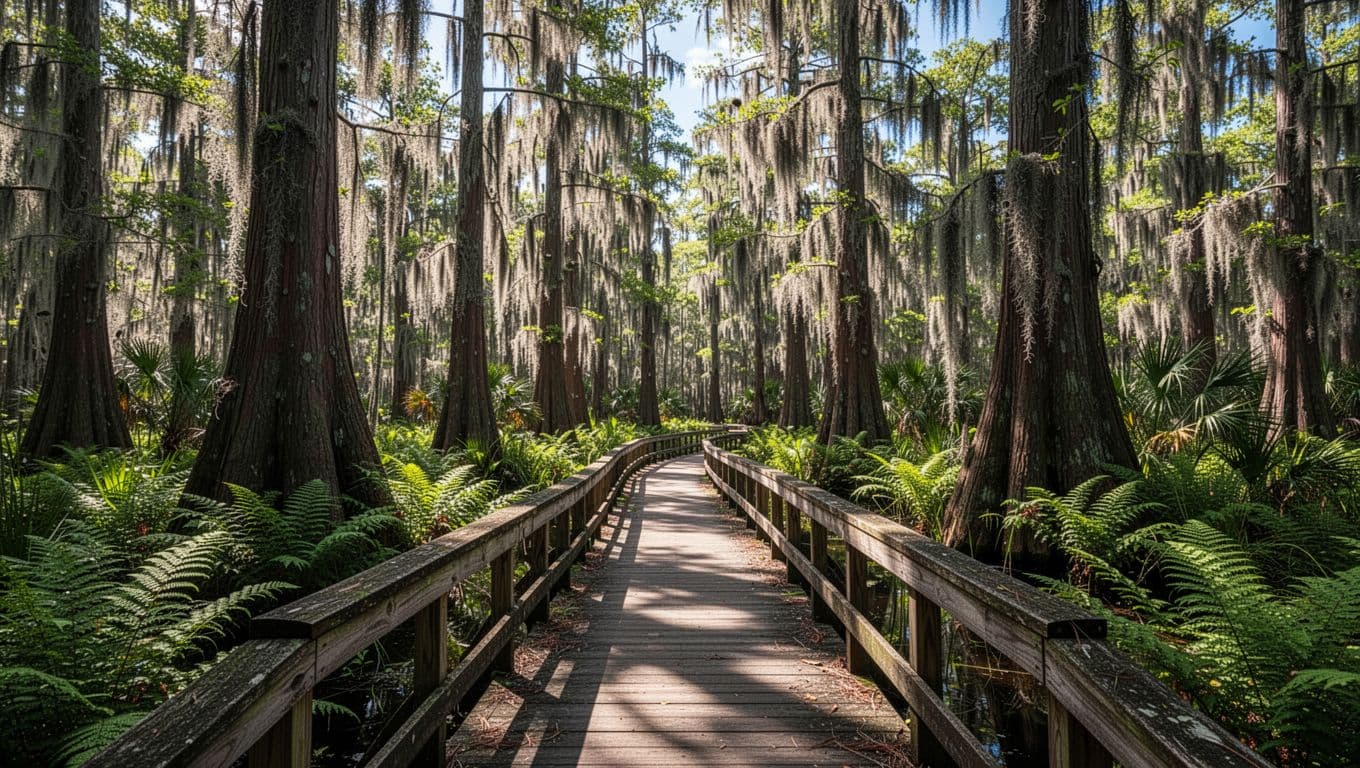
Big Cypress Bend Boardwalk offers a close view of the preserve's cypress swamp without a wet hike.
Hike the East Main and West Main Tram trails
The East Main Tram and West Main Tram are the preserve's most popular hiking routes. Both follow remnant logging tram roads, which are wider and easier to follow than many natural footpaths.
Janes Memorial Scenic Drive, also called Janes Scenic Drive, is a six-mile dirt road and the main access route for most hiking and biking trails. Expect uneven surfaces, puddles, loose sand, and shaded stretches. A vehicle with reasonable ground clearance can make the drive more comfortable, especially after rain.
The park brochure describes the former tram roads as high, dry, and open year-round. That doesn't mean every section stays dry in every season. Wear shoes that can handle mud, and allow extra time if water covers parts of the trail.
Photographers should watch the edges of the road and the bases of trees. Orchids and bromeliads can be easy to miss when you're focused on the trail ahead. The Uplands Hiking Trail and Yellow Trail add other options, but call the park office before choosing a route if recent storms have passed through.
See orchids and wildlife with a guided swamp walk
A self-guided hike shows you the preserve's surface. A guided swamp walk can show you how the water, plants, and trees fit together.
Reserve a wet walk before your trip
Guided walks enter the Fakahatchee Strand itself, so participants may wade through shallow water while looking for tropical ferns, bromeliads, and orchids. The ground can be uneven, and the water level changes with rain and season.
Friends of Fakahatchee's published information lists naturalist-led and biologist-led swamp walks during the cooler season, generally November through April. Published pricing has been $80 per person, with walks commonly scheduled from 9 a.m. to 1:30 p.m. Because schedules and prices can change, confirm the current 2026 details before paying or driving out.
Reservations are recommended two to three weeks ahead, especially during the winter visitor season. Wear old closed-toe shoes, lightweight clothing, and socks that stay comfortable when wet. A dry bag protects your phone, wallet, and camera.
A guided swamp walk is the only activity on this list where getting wet is part of the plan, so dress for the water instead of trying to stay spotless.
Don't enter the wet strand alone unless you know the route and current conditions. A guide can point out plants without encouraging visitors to touch or remove them, and can help the group keep a safe distance from wildlife.
Watch for orchids, birds, and reptiles
Fakahatchee is known as Florida's orchid capital for good reason. Many orchids grow as air plants on trees, rather than in soil, and some bloom for a short period. A guide can help you spot small flowers that blend into leaves and bark.
Still, don't plan your entire visit around finding one rare species. Blooming depends on weather, water, and timing. The better approach is to look at the whole plant community. Check tree trunks, fallen branches, wet depressions, and the spaces beside the trail.
Alligators may appear near water, while wading birds often stand motionless in shallow areas. Keep several yards away, never feed wildlife, and don't use food to attract animals for photographs. Binoculars give you a better view without disturbing the scene.
Plan your Fakahatchee visit for a smoother day
Fakahatchee Strand Preserve State Park is open 8 a.m. until sunset, 365 days a year. The park lists its address as 137 Coastline Drive, Copeland, Florida 34137. The official park brochure lists an entrance fee of $3 per vehicle with up to eight people, or $2 per individual.
The main entrance is reached by taking State Road 29 and turning onto Janes Scenic Drive. If you're coming on I-75, use Exit 80 for State Road 29, then drive south toward the park entrance. Download directions before leaving because cell service can become unreliable around remote trail areas.
Call the park office at 239-961-1925 for trail conditions, closures, or recent updates. This step matters after heavy rain, when a route that looked manageable on a map may have deeper water than expected.
Pack the basics for heat, bugs, and changing ground conditions:
- Carry more water than you expect to drink, especially during summer.
- Use insect repellent, sunscreen, and a hat.
- Wear closed-toe shoes with soles that can handle mud.
- Bring binoculars, a small first-aid kit, and a waterproof phone pouch.
- Carry a towel and a change of clothes for a guided wet walk.
Summer visits can be hot, humid, and buggy, with frequent afternoon storms. Cooler months usually make longer hikes more comfortable and provide the clearest window for seasonal swamp walks. If you're visiting in August 2026, start early and check the forecast before choosing a remote trail.
Visitors staying in Cape Coral, Sanibel, Matlacha, St. James City, or Captiva can also save time with a VIP-style concierge service. 1st Class Delivery can handle grocery and restaurant pickups, household errands, and airport rides, so your vacation day doesn't disappear into traffic and store lines. See its airport transportation and errand services when you want someone else to manage the driving and pickups.
Make your first visit count
The best things to do at Fakahatchee Strand Preserve don't require an ambitious itinerary. Walk Big Cypress Bend Boardwalk for an easy introduction, choose a tram trail for more time under the trees, and reserve a guided swamp walk if you want to enter the wet forest.
Check hours, fees, weather, and trail conditions before leaving. With suitable shoes, plenty of water, and patience for slow wildlife sightings, Fakahatchee offers a rare chance to experience Southwest Florida as a living swamp instead of a backdrop.