Collier Museum Visitor Guide for 2026
Planning a visit to the Collier Museum in Naples? This free local museum offers an easy way to spend a few hours with Southwest Florida history, native landscapes, and hands-on exhibits without committing to an all-day attraction.
The museum sits near central Naples at the Collier County Government Center. Before you go, check current hours, closures, and special events, since schedules can change during exhibit installations or county holidays. Here's what to know for a smooth 2026 visit.
Key Takeaways
- The Collier Museum at Government Center is at 3331 Tamiami Trail East in Naples.
- Published 2026 hours are Tuesday through Saturday, 9 a.m. to 4 p.m.
- Admission is free, and the museum covers local history across indoor galleries and outdoor grounds.
- The 2026 calendar includes special programming connected with America's 250th anniversary.
- Confirm hours and exhibits before leaving, especially around holidays and special events.
Collier Museum Hours, Admission, and Location
The Collier Museum at Government Center is located at 3331 Tamiami Trail East, Naples, FL 34112 . It's easy to reach from central Naples and offers a useful indoor stop when the afternoon heat or rain makes outdoor sightseeing less appealing.
The museum's published schedule for 2026 is:
| Visitor detail | Current information |
|---|---|
| Open days | Tuesday through Saturday |
| Hours | 9 a.m. to 4 p.m. |
| Sunday | Closed |
| Monday | Closed |
| Admission | Free |
| Phone | (239) 252-8476 |
| museums@collier.gov |
The official Collier Museum location page is the best place to verify the latest schedule before your visit. You can also check for exhibit updates, event notices, and temporary closures through Collier County Museums.
Free admission makes the museum especially convenient for families, vacationers, and residents looking for a low-cost activity. Donations may be accepted, but you don't need to purchase a ticket or reserve a standard visit in advance.
Plan to arrive with enough time to explore at a relaxed pace. An hour may be enough for a quick overview, while visitors who read exhibit panels and spend time outdoors should allow longer. Comfortable shoes help because the museum includes landscaped grounds in addition to its indoor galleries.
The most common planning mistake is arriving on a Monday. The museum is closed Sunday and Monday, so schedule it between Tuesday and Saturday.
What to See at the Collier Museum
The Collier Museum tells the story of the area now known as Collier County. Its galleries cover local history through artifacts, photographs, tools, vehicles, and displays about the people and environments that shaped Southwest Florida.
Inside, you'll find exhibits that help connect the region's early history with its modern growth. Displays may include information about Indigenous communities, early settlers, transportation, agriculture, tourism, conservation, and the development of Naples and surrounding communities. The subjects give visitors more context than a beach-focused itinerary usually provides.
The museum is also known for its collection of large historic objects. A swamp buggy is one of the most memorable examples. These unusual vehicles helped people travel through wet, undeveloped areas before modern roads reached many parts of the region. For children, the buggy often becomes an immediate point of interest. For adults, it shows how residents adapted to Florida's difficult terrain.

The museum's five acres of native Florida landscaping add another layer to the visit. Instead of presenting history only through cases and wall displays, the property places the museum in a setting that reflects the region's natural character.
Families can make the visit more engaging by asking children to look for objects connected with transportation, work, home life, and outdoor survival. Older visitors may prefer the photographs and local stories, which show how quickly the county changed during the twentieth century.
Because galleries and temporary displays can change, don't assume every exhibit will be available throughout 2026. Check the official calendar before visiting if you're interested in a particular topic.
2026 Exhibits and Special Events to Watch
The museum's 2026 schedule includes programming tied to the United States' 250th anniversary. Collier County announced an America's 250 celebration at the Collier Museum at Government Center, including a special exhibit featuring artwork submitted by participating students and recognition of contest winners.
Another 2026 listing identifies "Connect & Protect" , scheduled at the museum from January 20 through May 9, 2026 . Since that exhibit period has a fixed closing date, visitors should check the museum's current listings before planning around it. Events may also have different hours than regular museum visits.
Special programming can make the museum feel different from one visit to the next. A standard gallery visit may focus on permanent local-history displays, while a scheduled event could include a presentation, student artwork, a family activity, or a community gathering.
For the latest information, check Collier County's official announcements and the Collier County Museums Facebook page. Use those updates to confirm whether an event requires registration, has limited capacity, or changes normal access to the galleries.
Visitors who want a quieter experience may prefer a regular weekday morning. Families often find weekend hours easier, but Saturday can also be a popular time for local events. If you're traveling during a holiday week, verify the schedule before driving across the county.
Exploring the Outdoor Museum Grounds
The outdoor area is an important part of the Collier Museum experience. The property includes five acres of native Florida landscaping, giving visitors a chance to see regional plants and historic objects in an open-air setting.
A walk outside can break up time in the galleries, especially for children. It also creates a better sense of place. Local history makes more sense when you see the vegetation, soil, and terrain that affected transportation, settlement, farming, and development.
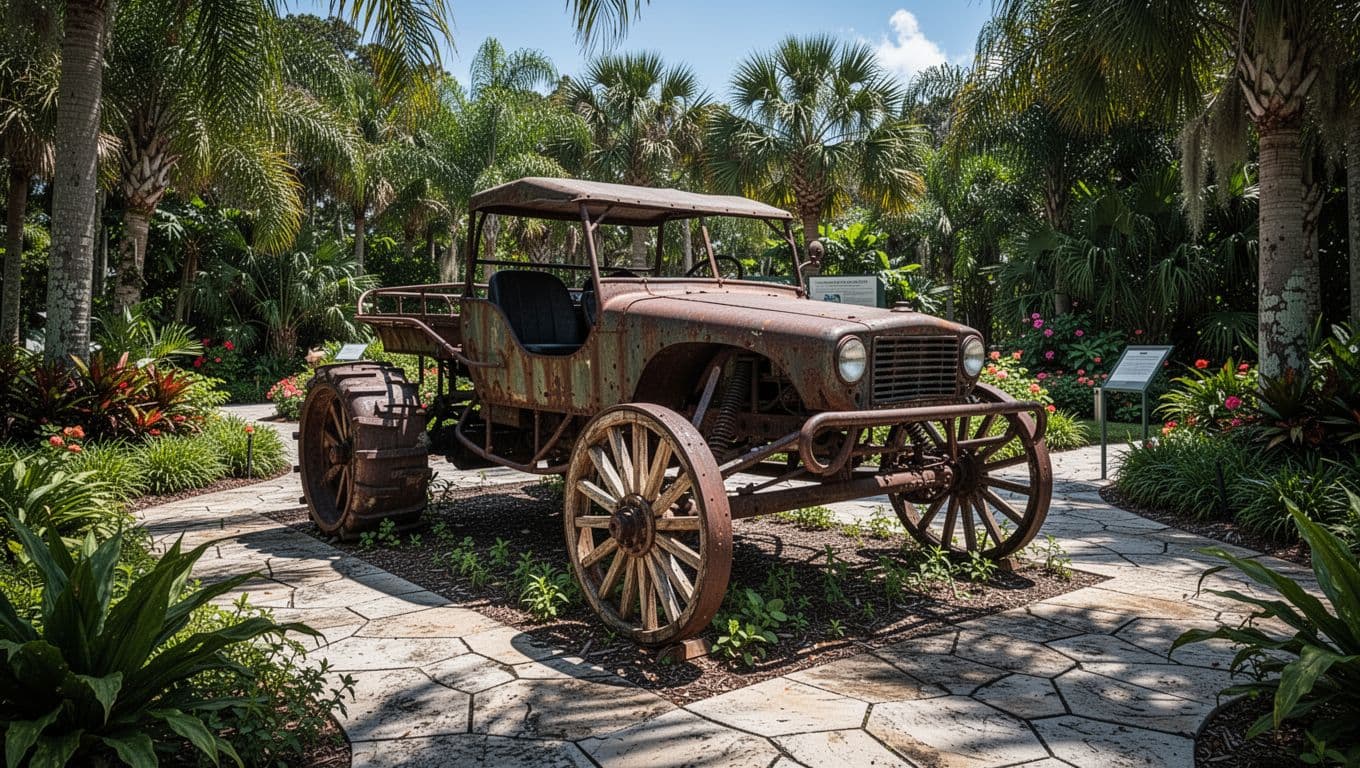
The outdoor displays are worth saving time for rather than treating them as an afterthought. Historic equipment and vehicles show the practical side of life in old Collier County. They also provide strong photo opportunities, although visitors should follow posted rules around exhibits and landscaped areas.
Florida weather can change quickly. Bring water, wear sun protection, and check the forecast before spending extra time outside. During the hottest part of the day, start with the outdoor grounds and move inside afterward, or reverse that order if rain is likely.
The landscaped setting also makes the museum a good companion stop after another Naples activity. You can visit in the morning, have lunch nearby, and continue to a beach, park, or shopping area later. Since admission is free, you don't need to build the entire day around the museum to make the visit worthwhile.
Tips for Families, Visitors, and Busy Residents
The museum works well for several types of visitors. Families can combine it with a short educational outing. Vacationers can add local history to a beach-heavy schedule. Residents may find it useful when visiting friends or relatives who want to understand the area beyond its resorts and restaurants.
A few simple choices can improve the experience:
- Check the date first. Avoid Sunday and Monday, then confirm holiday hours and special-event changes.
- Allow extra time outdoors. The grounds add more than a quick walk from the parking area to the entrance.
- Dress for Southwest Florida. Lightweight clothing, comfortable shoes, water, and sun protection are practical choices.
- Ask about current exhibits. Temporary displays can change during the year.
- Keep the visit flexible. Free admission makes it easy to stay for an hour or leave after a shorter visit.
If you're staying in Cape Coral, Sanibel, Captiva, Matlacha, or another nearby community, the drive to Naples may take planning around traffic. Visitors who want a VIP-style way to protect vacation time can arrange help with errands, food pickups, groceries, or other driving through 1st Class Delivery's professional delivery services. That leaves you more time to enjoy the museum and the rest of your day instead of fitting every pickup into your itinerary.
The same option can help local residents who are hosting guests. A delivery service can handle a restaurant order, groceries, pharmacy pickup, or party supplies while you spend time with family at the museum or elsewhere in Naples.
How to Plan a Museum Day in Naples
A visit to the Collier Museum can fit into either a short outing or a larger Naples itinerary. Start by checking the official museum page for hours and events. Then consider the weather, traffic, and the other places you want to visit.
Morning is often a comfortable choice because you'll have more time to explore the grounds before the strongest afternoon heat. If rain moves in, the indoor galleries provide a useful change of plan, but outdoor access may be less enjoyable.
The museum is one of five Collier County Museums. The others include Naples Depot Museum, the Museum of the Everglades, Immokalee Pioneer Museum at Roberts Ranch, and the Marco Island Historical Museum. Each location focuses on a different part of regional history, so visitors who enjoy the Government Center museum may want to add another branch on a future trip.
Before leaving, confirm three details: the museum is open that day, the exhibit you want to see is still on display, and any special event has not changed normal visitor access. Those checks take only a few minutes and can prevent an unnecessary drive.
Conclusion
The Collier Museum at Government Center offers a free, practical way to learn how Southwest Florida developed. Its indoor galleries, historic vehicles, temporary exhibits, and native landscaping give visitors more than a quick stop indoors.
For 2026, schedule your visit Tuesday through Saturday between 9 a.m. and 4 p.m., then verify current details before you go. With a little planning, the museum can turn an ordinary Naples afternoon into a closer look at the place beyond the shoreline.