Cape Coral Shore Fishing Spots for First-Time Visitors
You don't need a boat to spend a good morning fishing in Cape Coral. For your first Cape Coral shore fishing outing, start with city-approved access , then choose a seawall, pier, or shoreline that fits your plans.
The important distinctions are where casting is allowed, when the fishing area is available, and which license covers your outing. Start with those basics, and you can keep the rest of the day relaxed.
Key Takeaways
- Cape Coral lists eight approved park fishing locations, with designated seawalls, piers, lake edges, and river shoreline.
- Four locations have listed 24-hour fishing access; the other four allow fishing during daylight only.
- Florida's free resident saltwater shoreline license doesn't apply to nonresident visitors. Nonresident saltwater licenses cost $17 for three days, $30 for seven days, or $47 annually.
Cape Coral Shore Fishing Starts With Public Access
Cape Coral's waterfront includes private docks and residential seawalls. Water beside a road or rental property doesn't automatically give you public fishing access.
The city's approved fishing locations provide a straightforward starting point. Each listing identifies a fishing area and its permitted hours.
Here's how the eight approved locations compare.
| Location | Designated fishing area | Listed fishing hours |
|---|---|---|
| Bernice Braden Park | Shoreline and under the bridge | 24 hours |
| Four Freedoms Park | Seawall area | 24 hours |
| Four Mile Cove Eco Preserve | Two piers | Daylight only |
| Horton Park & Boat Ramp | River shoreline | 24 hours |
| Lake Kennedy Community Park | Two small piers | Daylight only |
| Rosen Park | Seawall area | 24 hours |
| Seahawk Airfield at Festival Park, also called Lake Argosy | Around the lake | Daylight only |
| Sirenia Vista | Shoreline | Daylight only |
The useful distinction is fishing-area access , rather than general park access. A 24-hour fishing listing doesn't mean every facility, path, or restroom stays open overnight.
For a first visit, daylight makes it easier to see footing and manage your line. Stay within the designated area, respect closures and barriers, and keep neighboring docks and residential property out of your route.
Seawall and River Spots for a Simple First Outing
Seawalls offer a clear place to begin, while river shoreline gives you a different setting. Choose based on how you want to spend the outing, without expecting a particular catch.
Four Freedoms Park and Rosen Park
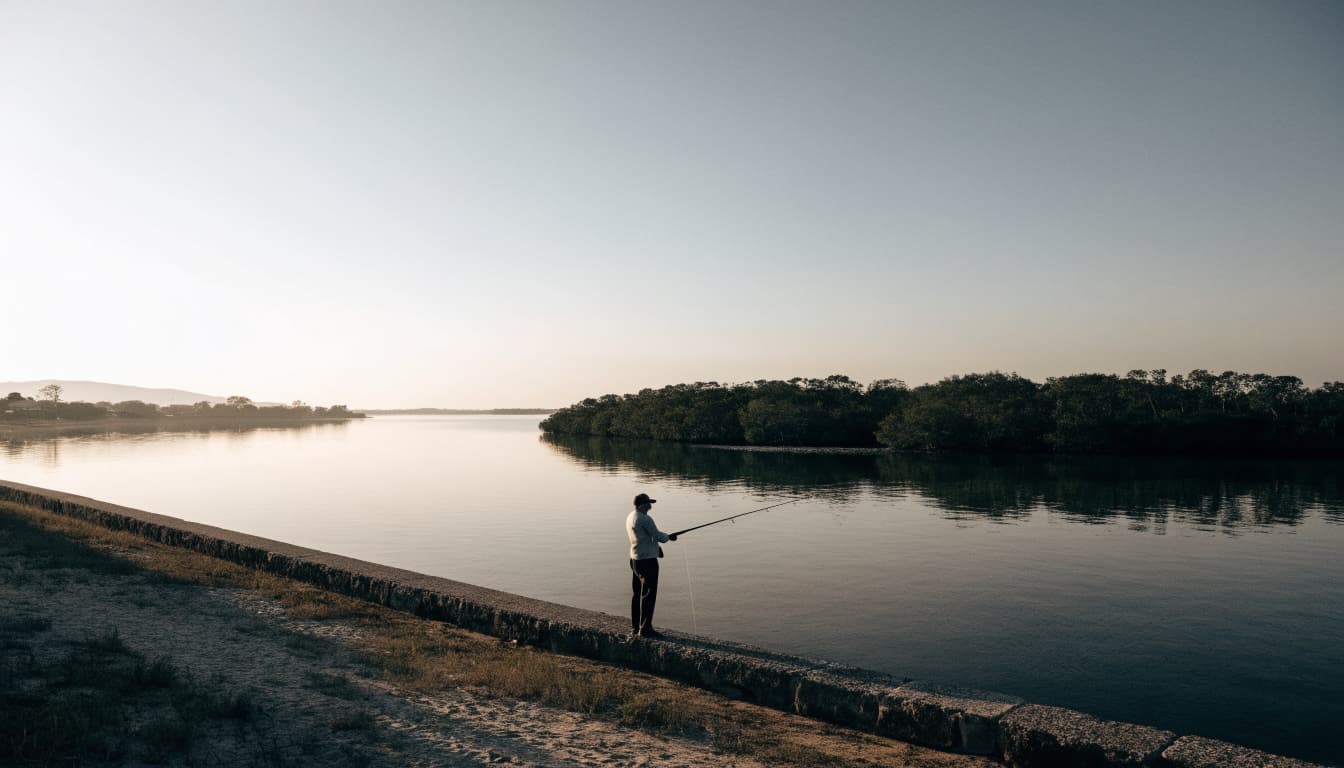
Four Freedoms Park's approved fishing area is its seawall. It's a useful option when your group wants to combine casting with a broader park visit rather than make fishing the entire day's activity.
Rosen Park also has designated seawall fishing with listed 24-hour access. The city's Rosen Park page describes its waterfront setting and boat access.
At either location, leave enough room behind you to cast safely. Keep tackle away from walking routes, and give passing boats space. A seawall can put the water below your feet, so bring a landing net rather than relying on the rod to lift a fish.
Bernice Braden Park and Horton Park
Bernice Braden Park allows fishing along its shoreline and under the bridge. Horton Park & Boat Ramp lists its river shoreline as the approved fishing area.
Both have listed 24-hour fishing access, but a first-time visitor gains little by starting in darkness. Daylight helps you identify obstacles and see approaching boat traffic.
At Horton, keep casting activity clear of launching boats. At Bernice Braden, choose a position with room for your line and other park users. Neither location's fishing designation gives permission to block paths or enter restricted areas.
Daylight Spots That Pair Fishing With Nature
If some people in your group prefer watching wildlife or walking, a daylight-only location can make the outing more flexible. You can fish briefly without asking everyone to spend hours beside a rod.
Four Mile Cove Eco Preserve
Four Mile Cove has two approved fishing piers , with fishing limited to daylight. That gives visitors defined places to cast rather than a reason to step off the boardwalk or push through vegetation.
Its wetland setting also suits a slower outing with birdwatching and waterfront views. However, carry only what you can comfortably manage on foot. A rod, compact tackle bag, water bottle, and landing net are easier to handle than several bulky bags.
For companions who want more walking than fishing, our guide to waterfront walks and picnics offers other ways to enjoy Cape Coral's parks.
Sirenia Vista
Sirenia Vista's approved fishing area is its shoreline, and fishing is daylight only. It's another choice for visitors who enjoy observing the water between casts.
Keep your attention on wildlife as well as your line. If a manatee or other animal approaches, stop casting toward it and give it room. Never offer bait or food to wildlife.
Fishing line can harm birds and aquatic animals, so collect loose line immediately. Leave the shoreline as clean as you found it, including small pieces of packaging that can blow into the water.
Lake Kennedy and Lake Argosy Offer Inland Alternatives
You don't have to make a riverfront location your first stop. The city's approved list also includes two lake settings.
Lake Kennedy Community Park has two small fishing piers , available for fishing during daylight. The defined pier locations help you avoid treating the entire lake edge as a casting area. Because the piers are small, keep your equipment compact and leave room for others.
Seahawk Airfield at Festival Park, also called Lake Argosy, allows fishing around the lake during daylight. Keep your activity within the permitted lake area and separate from airfield operations.
Choose between them based on whether you prefer a designated pier or a lake-edge setting. Also remember that saltwater and freshwater licenses cover different activities. A saltwater license doesn't cover freshwater fishing simply because both locations are within Cape Coral.
Understand the License Before You Cast
A public fishing area and a fishing license answer different questions. The park designation allows access; the license covers your fishing activity.
Florida's saltwater recreational fishing regulations apply to shore anglers as well as people fishing from boats. Catch-and-release fishing still requires the appropriate license unless an exemption applies.
Florida Residents Have a Shoreline Option
Florida residents can obtain a no-cost annual saltwater shoreline license . It covers saltwater fishing from land or a structure attached to land.
That license doesn't cover fishing from a boat or an island reached by boat. Therefore, a shoreline morning and a boat-fishing afternoon may require different licensing.
The free option is tied to Florida residency, not to the length of your vacation or whether you own a home elsewhere. It also isn't a freshwater license. Keep those distinctions clear when choosing your outing.
Nonresident Visitors Need a Paid License
Nonresident saltwater license prices are $17 for three days, $30 for seven days, and $47 for one year. Choose the period that covers your planned fishing days.
Licensing also doesn't give you permission to keep every fish you catch. Species rules include separate harvest requirements, seasons, and limits.
For example, FWC's snook harvest requirements include a snook permit and recreational fishing license unless exempt. For a straightforward first outing, plan to release your catch rather than build dinner plans around keeping fish.
Pack Light and Keep the Shoreline Safe
A short Cape Coral shore fishing session doesn't need a large equipment haul. Compact gear makes it easier to move safely and share a pier or seawall.
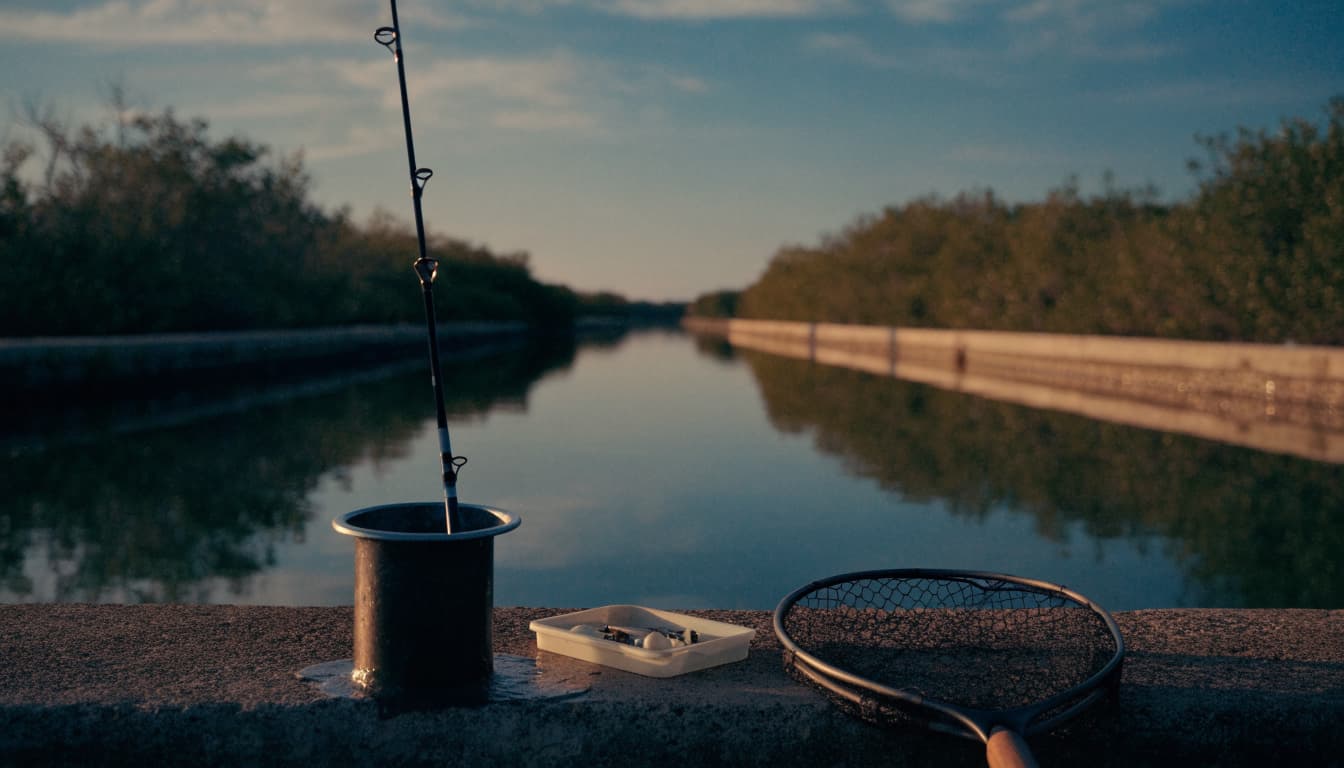
Bring the essentials:
- Carry one manageable rod-and-reel setup, a small tackle selection, pliers, and a landing net.
- Pack drinking water, sunscreen, a hat, polarized sunglasses, and insect repellent for shaded areas.
- Use shoes with dependable traction, and bring a bag for used line and other rubbish.
- Keep your phone protected and your license accessible.
Before casting, look behind you for walkers, children, and overhanging branches. Then position your bag away from the edge and walking route.
Watch how wind and moving water carry your line. If it drifts into another angler's space or toward a boat route, retrieve it and adjust your position.
Listed 24-hour fishing access doesn't mean nearby restrooms or other park facilities remain available all night.
Avoid standing on wet seawall edges or climbing barriers for a longer cast. With children, keep hooks and tackle under adult control, and use properly fitted life jackets near the water.
Also, leave the shoreline when thunder begins. A bridge, tree, or open shelter isn't a safe place to wait out lightning.
Build a Short Outing Around One Spot
A first visit works well when you allow time to settle in. Moving between several parks can turn a relaxed fishing morning into repeated packing and driving.
Give Yourself Time to Learn the Setting
Pick one approved location and allow roughly an hour or two for your first session. That leaves time to find the designated area, unpack, and fish without rushing.
Start after sunrise at a daylight-only location. At a site with 24-hour fishing access, you can choose an earlier start, but visibility still makes the first visit easier.
Keep a walking option in mind if your companions lose interest in fishing. Our guide to Cape Coral visitor activities offers ideas for the rest of the day without making every stop another fishing session.
Leave Room for Vacation, Not Errands
Prepare water and snacks before leaving, then keep the post-fishing plan simple. Scheduling lunch or groceries for your return is easier than carrying extra supplies around the park.
At 1st Class Delivery, our VIP-style help is for people who'd rather enjoy vacation, or daily life, than run errands. We can handle grocery shopping, food pickup, and household shopping while you keep your time free.
That support fits a park morning naturally. You can enjoy the waterfront, return with less on your to-do list, and leave the store run to us.
Make Your First Shore Fishing Visit Easy
The strongest starting point is designated public access that fits your schedule. Choose one location, use the appropriate license, and carry gear you can manage safely.
A successful first outing can be a few casts and a relaxed hour beside the water. With the access details settled, Cape Coral's shoreline becomes easier to enjoy without a boat or an overloaded itinerary.